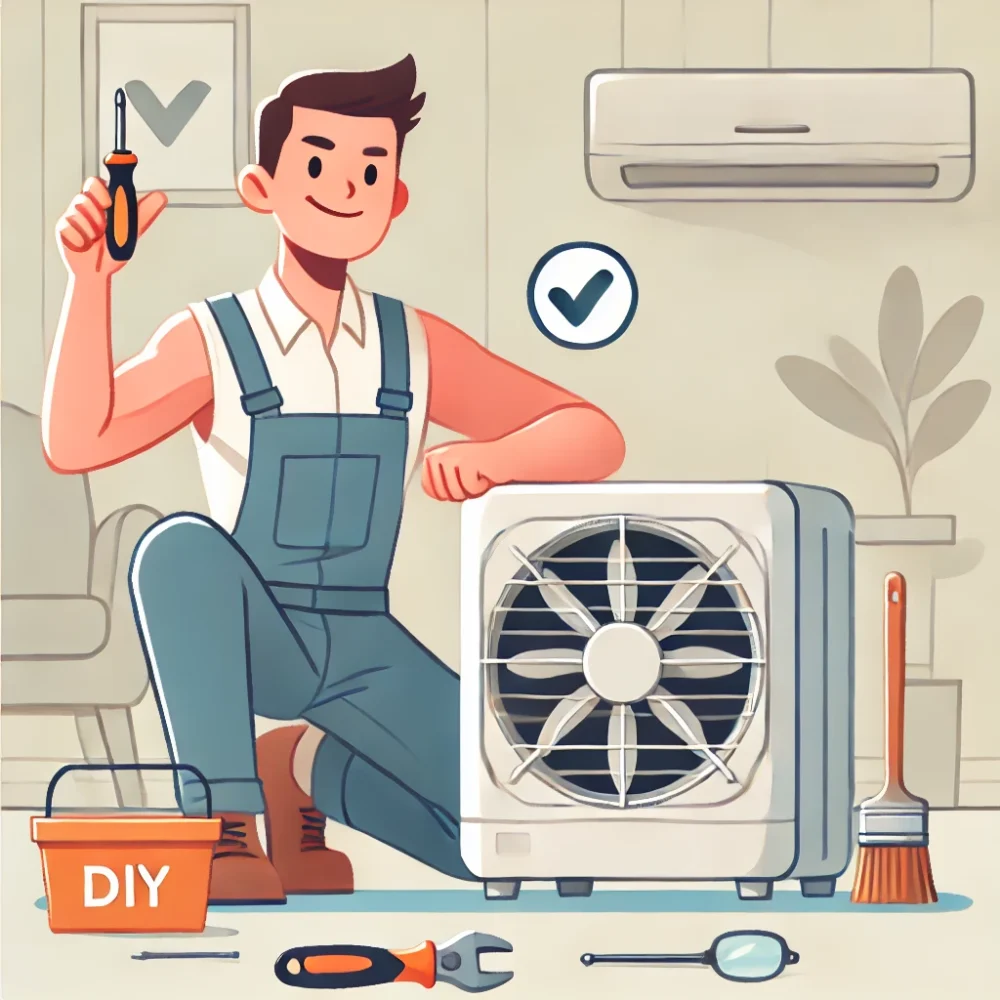
Can Air Cooler Problems Be Fixed Without a Technician?
Yes, some air cooler problems can be addressed at home through basic cleaning, water-level checks and other maintenance tasks permitted by the manufacturer’s instructions. However, electrical faults, motor problems, persistent water leakage and internal component failures generally require professional inspection.
The key is to distinguish routine maintenance from repairs that involve electrical or mechanical components. You can safely check certain visible symptoms, but a symptom alone does not confirm the underlying fault.
What Air Cooler Problems Can You Fix at Home?
Basic maintenance may be suitable when the task is described in your air cooler’s user manual, the component is designed to be accessible, and no internal repair is required.
Examples include:
- Cleaning accessible external surfaces.
- Checking the water level.
- Cleaning an accessible water tank.
- Cleaning removable cooling pads according to the manufacturer’s instructions.
- Removing visible dust from accessible air vents.
- Checking whether airflow is obstructed.
- Checking basic operating settings.
These activities are maintenance, not necessarily repairs. If the cooler continues to malfunction after basic checks, avoid dismantling it to investigate the cause.
Safety first: Switch off and unplug the cooler before cleaning or inspecting accessible components. Keep water away from electrical parts, and follow the instructions for your specific model.
Which Air Cooler Problems Need a Technician?
Professional inspection is appropriate when a fault involves electrical components, internal mechanical parts or a problem that persists after routine maintenance.
Air cooler problem | Safe preliminary check | When to seek professional help |
Poor cooling | Check water level, accessible pad condition and airflow | Cooling remains poor after basic maintenance |
Weak airflow | Check accessible vents for obstructions | Airflow remains weak or the fan behaves abnormally |
Water not circulating | Check water level and visible, accessible obstructions | The pump still fails to circulate water |
Water leakage | Check the water level and accessible drain area with the cooler unplugged | Leakage continues or the source is unclear |
Fan not working | Check normal controls and inspect the exterior | The fan still does not operate normally |
Unusual noise or vibration | Switch off the cooler and check for obvious external obstructions | Noise persists or suggests a mechanical fault |
Burning smell, sparks or electric shock | Stop using the appliance | Arrange appropriate professional inspection |
Damaged cord or plug | Do not continue using the cooler | Have the damaged component assessed and repaired appropriately |
These are general guidelines, not confirmed diagnoses. The appropriate repair depends on the cooler’s model, condition and the fault identified during inspection.
How to Troubleshoot Common Air Cooler Problems Safely
1. Air cooler is not cooling properly
Poor cooling can have several possible causes, including restricted airflow, the condition of the cooling pads, inadequate water circulation or operating conditions.
With the cooler switched off and unplugged, you can:
- Check whether the water level is appropriate for your model.
- Inspect accessible cooling pads for visible dirt or damage.
- Check for obvious obstructions around the air intake and outlet.
- Clean accessible components according to the user manual.
If cooling does not improve, do not assume that the pump or motor needs replacement. A technician may need to inspect the relevant components to identify the cause.
2. Air cooler has weak airflow
Dust accumulation and blocked air passages can affect airflow. Check the accessible vents and remove visible obstructions while the appliance is unplugged.
Do not remove internal guards or dismantle the fan assembly unless the manufacturer explicitly identifies the procedure as suitable for the user.
If the fan rubs against another component, vibrates excessively, makes persistent unusual noises or fails to rotate normally, stop troubleshooting and arrange professional inspection.
3. Water is not circulating
Some air coolers use a pump to distribute water to the cooling pads. Poor circulation can affect cooling performance, but it does not automatically mean that the pump has failed.
You can check the water level and look for an obvious obstruction in an accessible area. Consult the manufacturer’s troubleshooting instructions for any additional user-permitted checks.
Do not open the pump assembly or handle its electrical connections. If water still does not circulate, professional diagnosis is appropriate.
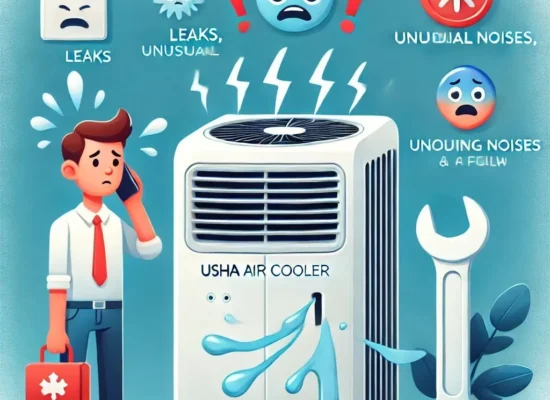
4. Water is leaking from the cooler
First switch off and unplug the appliance. If it is safe to do so, inspect accessible areas such as the tank exterior and drain area for visible signs of leakage.
Do not open the appliance to investigate internal hoses, wiring or pump components.
If the leak continues, the source is unclear, or water may have reached electrical parts, stop using the cooler and arrange professional inspection.
5. The fan or motor is making unusual noises
Unusual noise can arise from different mechanical or electrical conditions. It is not possible to determine the exact fault from the sound alone.
Switch off the cooler if the noise is severe, the unit vibrates abnormally, or the motor appears to overheat. Do not attempt internal motor repairs, electrical adjustments or improvised lubrication.
A technician can inspect the relevant components and determine what work, if any, is necessary.
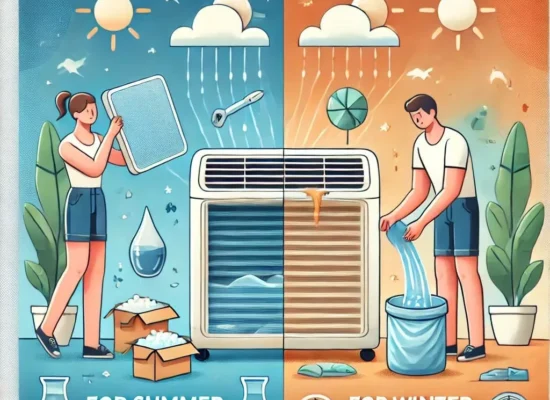
How to Clean an Air Cooler at Home
Cleaning can help address some maintenance-related problems, provided the manufacturer permits the procedure.
- Switch off and unplug the cooler. Do not clean the appliance while it is connected to power.
- Drain the water if the model permits it. Follow the instructions for the tank and drain arrangement.
- Clean accessible tank surfaces. Use a suitable cleaning method that will not damage the tank material.
- Maintain removable cooling pads. Clean or rinse them only as directed by the manufacturer.
- Remove visible dust from accessible surfaces. Keep water and cleaning products away from electrical components.
- Allow cleaned parts to dry as instructed. Refit only components designed for user removal.
- Check the appliance externally. Look for visible damage, leaks and damaged cords or plugs before returning it to use.
Do not use a cleaning chemical, descaling mixture or disinfectant unless it is appropriate for your cooler and permitted by the manufacturer’s instructions.
For more detailed cleaning guidance, see our guide to servicing an air cooler at home.
Air Cooler Repairs You Should Not Attempt Yourself
Routine maintenance is different from internal appliance repair. Unless you have the necessary technical qualifications and the work is appropriate for the specific appliance, leave the following to a qualified professional:
- Electrical wiring and internal electrical connections.
- Motor repair or replacement.
- Control-board repairs.
- Electrical pump repairs.
- Repairs involving exposed wires or damaged plugs.
- Internal leaks that require disassembly.
- Repairs requiring access to concealed mechanical components.
Never bypass safety mechanisms or continue operating an appliance that appears electrically unsafe.
The Electrical Safety Foundation International advises that an appliance that repeatedly trips a fuse or circuit breaker may have a defect that creates a fire or electric-shock risk. Stop using the appliance and arrange appropriate repair rather than repeatedly resetting the circuit.
Reference: ESFI — Appliance Safety Tips.
When Should You Stop DIY Troubleshooting?
Stop using the cooler and seek professional assistance if you notice:
- A burning smell, smoke or sparks.
- An electric shock or suspected electrical fault.
- A damaged power cord or plug.
- Repeated circuit-breaker trips.
- Water reaching electrical components.
- Motor overheating or severe vibration.
- Persistent leakage.
- A fault that requires internal disassembly.
- A problem that remains after basic maintenance.
If there is smoke or an immediate electrical hazard, keep away from the appliance and follow appropriate emergency safety procedures. Do not touch a wet or electrically unsafe appliance to unplug it.
For a cooler that is still under warranty, check the manufacturer’s terms before arranging unauthorized repairs or replacing components.
How to Prevent Common Air Cooler Problems
Regular, appropriate maintenance can help you notice developing problems before they become more disruptive.
- Keep the tank clean: Follow the manufacturer’s cleaning and water-management instructions.
- Maintain the cooling pads: Inspect accessible pads and clean them as directed.
- Keep airflow unobstructed: Ensure that the air intake and outlet are not blocked.
- Check the water level: Follow the markings and instructions for your model.
- Inspect the exterior: Look for visible leaks, cracks, damaged cords and abnormal noise.
- Follow the owner’s manual: Cleaning methods and maintenance requirements differ between models.
There is no universal replacement interval or cleaning schedule that applies to every air cooler. Adjust maintenance according to the manufacturer’s instructions and the appliance’s actual condition.
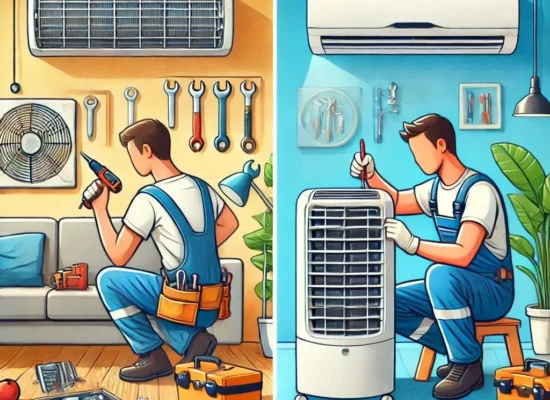
Can You Repair an Air Cooler Yourself or Should You Call a Technician?
Use this simple decision rule before attempting any work:
Is the task routine maintenance that the manufacturer permits, involves only accessible components, and can be performed with the appliance unplugged?
If yes, it may be suitable for you to handle at home.
If the task requires opening electrical or internal components, replacing parts, diagnosing a persistent fault or working around damaged wiring, stop and seek professional assistance.
Repeatedly adjusting or replacing components without identifying the underlying problem can waste time and potentially cause additional damage.
For more troubleshooting topics, explore our air cooler maintenance and repair guides.
Frequently Asked Questions
Can I fix an air cooler that is not cooling?
You can start by checking the water level, accessible cooling pads, visible dirt and airflow obstructions. If the problem continues after basic maintenance, a technician may need to inspect the water-circulation system or other components.
Can I clean my air cooler without a technician?
Yes, many models permit basic cleaning of the tank, exterior, vents and removable cooling pads. Follow your owner’s manual, unplug the appliance first and avoid internal electrical components.
Can I repair an air cooler water pump at home?
Basic external checks may be possible, but pump repair or replacement can involve electrical and mechanical components. If the pump does not work after permitted preliminary checks, arrange professional inspection.
Can I repair an air cooler motor myself?
Motor repair is generally not suitable as a routine DIY task. If the motor overheats, makes unusual noises, repeatedly stops or fails to start, switch off the cooler and seek professional assistance.
What should I do if my air cooler smells burnt?
Stop using the cooler. If it is safe to disconnect it, unplug it without touching damaged or wet parts. Do not restart the appliance to test whether the smell disappears; arrange professional inspection.
Can DIY repairs affect my air cooler’s warranty?
They may, depending on the manufacturer’s terms, the model and the type of work performed. Review the applicable warranty conditions before undertaking internal repairs or using unauthorized replacement parts.
When should I call an air cooler technician?
Arrange professional assistance when electrical faults, persistent leaks, motor or pump problems, unusual mechanical noise or internal component failures are suspected, or when safe preliminary maintenance does not resolve the problem.
Air Cooler Repair and Maintenance in Hyderabad
If basic maintenance does not resolve the problem, Aircooler Clinic can be contacted to discuss an air cooler repair or maintenance requirement and check service availability for your location.
Aircooler Clinic is a unit of FIXNEARME and operates as a doorstep/service-area business. It does not operate a separate physical service centre. Service availability should be confirmed before booking.
Phone: 7997100067
Email: aircoolerclinic@gmail.com
When enquiring, provide your location, the cooler brand and model if known, and a brief description of the problem.
Conclusion
Some air cooler problems can be addressed without a technician, particularly when they involve routine cleaning, water-level checks or other manufacturer-approved maintenance tasks. Electrical faults, motor problems, persistent leaks and repairs requiring internal disassembly should be handled professionally.
The safest approach is to perform only the checks you can complete without opening internal components, and to stop when a problem persists or presents a safety risk.