Why Is My Air Cooler Consuming More Electricity Than Usual?
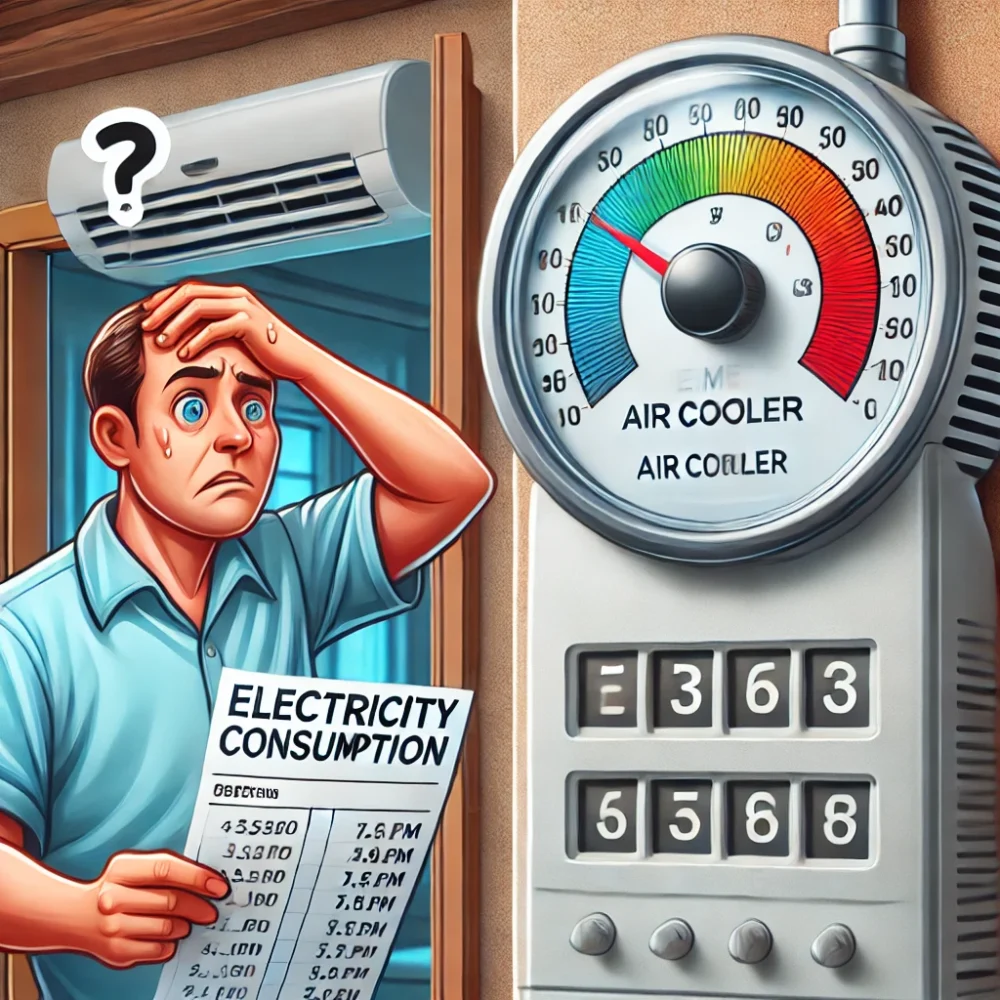
If your air cooler seems to be increasing your electricity bill, first determine whether the appliance is actually using more power or whether it is running for longer than before. Changes in operating hours, fan settings, restricted airflow and developing mechanical or electrical faults can all be relevant, but a higher bill alone does not identify the cause.
Start by comparing your cooler’s rated wattage, daily operating hours and settings. Then check accessible maintenance items with the appliance switched off and unplugged. If unusual electricity use continues, or you notice overheating, a burning smell, sparking or repeated electrical tripping, stop using the cooler and arrange professional inspection.
First, Check Whether Your Air Cooler Is Actually Using More Electricity
Electricity consumption depends on the power an appliance uses and the length of time it operates.
Use this basic calculation:
Electricity consumption (kWh) = Power (watts) × Operating hours ÷ 1,000
One kilowatt-hour (kWh) is commonly called one unit of electricity on an electricity bill.
Example: Calculate daily electricity consumption
Suppose your air cooler has a rated power consumption of 150 watts and operates for eight hours.
150 × 8 ÷ 1,000 = 1.2 kWh per day
If the same cooler operates for 12 hours:
150 × 12 ÷ 1,000 = 1.8 kWh per day
In this example, daily energy consumption increases because the operating time increases, even though the assumed wattage stays the same.
These are illustrative calculations, not measurements of every air cooler. Actual consumption depends on the appliance’s specifications, operating mode and power draw.
To estimate the electricity cost attributable to the cooler, multiply its estimated consumption in kWh by the applicable electricity tariff. Your total household bill may also include consumption from other appliances and applicable charges.
For a general technical reference on energy calculations, consult the Bureau of Energy Efficiency’s ECBC 2017 User Manual.
7 Possible Reasons Your Air Cooler May Be Using More Electricity
1. Longer Operating Hours
A cooler that runs for more hours will generally use more total energy.
Consider whether you have recently:
- Started running the cooler earlier in the day.
- Left it operating overnight.
- Increased its daily operating hours.
- Started using additional coolers in other rooms.
- Changed your usual cooling routine.
Compare similar periods before concluding that the appliance has developed a fault.
2. Higher Fan-Speed Settings
Some air coolers use more electrical power at higher fan settings, depending on the motor and control design.
If you have changed from a lower to a higher speed, compare the operating conditions and the manufacturer’s specifications.
Use a comfortable setting appropriate to your needs. The lowest fan setting is not automatically the most efficient choice in every situation if it requires substantially longer operation.
3. Dirty Cooling Pads or Restricted Airflow
Dust, mineral deposits and accumulated dirt can restrict airflow through the cooling system. This may reduce cooling performance and make the cooler less effective.
Whether restricted airflow also increases motor load or electrical consumption depends on the particular appliance design. Dirty pads should not automatically be treated as proof of excessive power draw.
With the cooler switched off and unplugged, inspect accessible cooling pads, filters and air passages. Clean them only as directed by the manufacturer’s instructions.
For broader troubleshooting, see common air cooler problems and how to troubleshoot them.
4. Dust Around Accessible Fan Areas
Dust or an obstruction around accessible fan and airflow areas can affect air movement.
After disconnecting the appliance from power, check for visible dust and obstructions in areas intended for routine user cleaning.
Do not force open panels or attempt to reach the motor, internal wiring or other electrical components. If the fan appears damaged, loose or mechanically abnormal, arrange professional inspection.
5. A Developing Motor or Mechanical Problem
A motor or mechanical fault can affect the cooler’s operation and may contribute to abnormal electrical behaviour. However, a higher bill alone cannot confirm motor failure.
Warning signs include:
- Unusual or persistent noise.
- Difficulty starting.
- Intermittent operation.
- Reduced airflow.
- Abnormal overheating.
- A burning smell.
- Repeated tripping of electrical protection.
If you notice these symptoms, stop using the appliance when a fault is suspected and seek professional inspection. Do not dismantle the motor or attempt electrical repairs yourself.
6. A Pump or Water-Circulation Problem
On models equipped with a water pump, poor circulation can reduce cooling performance.
Possible signs include cooling pads that are not receiving water as expected, interrupted water distribution or unusual pump noise.
These symptoms do not establish that the pump is consuming excessive electricity. A pump, blockage, water-distribution problem or another fault may require diagnosis.
Check only accessible water levels and user-serviceable components according to the manual. Do not put your hands inside an operating cooler or access electrical components while the appliance is connected to power.
7. Another Electrical or Appliance Fault
An internal electrical or mechanical problem may cause abnormal operation. Symptoms can include overheating, intermittent operation, sparking, a burning smell or repeated circuit-protection trips.
These symptoms require caution rather than trial-and-error repair.
Switch off and unplug the cooler if it is safe to do so. Do not repeatedly reset a tripped protective device, open the electrical compartment or test live wiring. Arrange qualified professional inspection.
How to Check Your Air Cooler Safely
Follow these checks in order, stopping if you encounter a safety concern.
Step 1: Switch Off and Unplug the Cooler
Disconnect the cooler from electrical power before cleaning or physically inspecting accessible components.
Do not clean the appliance while it is connected to power.
Step 2: Inspect Accessible Cooling Pads and Filters
Look for visible dust, mineral deposits, damage or deterioration.
Clean or replace components only according to the instructions for your model. Not all cooling pads are designed for the same cleaning method.
Step 3: Check Accessible Air Passages
Look for obvious obstructions around the air intake and outlet.
Remove dust only from accessible areas intended for user maintenance. Do not dismantle the cooler to reach hidden components.
Step 4: Review Operating Hours and Fan Settings
Record the approximate hours of use, fan setting and whether your routine has changed.
Compare these details with the period when electricity consumption appeared normal.
Step 5: Review the Rated Wattage
Check the rating plate or owner manual for the cooler’s power specifications.
Do not assume that all models or fan settings consume the same amount of electricity. Where the appliance has multiple operating modes, the actual power draw may differ by mode.
Step 6: Observe Water Circulation Only as the Manual Allows
If the cooler has a pump, check the user-accessible water level and settings.
Do not reach into moving parts or attempt to access the pump while the appliance is powered. If circulation remains abnormal, seek professional diagnosis.
Step 7: Stop If You Notice Warning Signs
Stop using the cooler if you notice a burning smell, smoke, sparking, abnormal overheating, damaged power wiring, repeated electrical tripping or water reaching electrical components.
Do not continue operating it to see whether the problem disappears.
Air Cooler Electricity Troubleshooting Table
What you notice | Possible explanation | Appropriate action |
Electricity bill increased, but the cooler seems normal | Longer operating hours or other household consumption | Compare usage hours and the relevant billing periods |
Weak airflow | Restricted airflow, dirty pads or a mechanical problem | Clean accessible areas with power disconnected |
Unusual noise | Obstruction, loose component or mechanical fault | Stop if abnormal; arrange inspection if it persists |
Poor water circulation | Pump, blockage or distribution issue | Check user-accessible settings; seek inspection if unresolved |
Overheating or burning smell | Possible motor or electrical fault | Stop using the cooler and arrange professional inspection |
Repeated electrical tripping | Possible electrical fault or overload | Do not repeatedly reset and operate the appliance |
Electricity use remains unusually high | Several possible causes | Compare usage and specifications, then seek diagnosis |
These are possible explanations, not confirmed diagnoses. Different air cooler models use different components and operating systems.
How to Reduce Unnecessary Air Cooler Electricity Use
Keep Maintenance Components Clean
Clean accessible pads, filters, vents and the water tank according to the manufacturer’s instructions.
The appropriate cleaning frequency depends on the model, water quality, dust levels and how often the appliance is used.
Use Appropriate Operating Settings
Choose a fan setting that provides the airflow and comfort you need. Avoid running the cooler unnecessarily when it is not required.
Avoid Unnecessary Operating Hours
Switch the cooler off when it is not needed. A timer or a consistent operating routine may help prevent accidental extended use.
Maintain the Water System
Keep the tank and accessible water system clean according to the owner’s manual. Remove old water and maintain the appliance as recommended.
Poor water circulation can affect cooling performance, but it should not automatically be interpreted as excessive electrical consumption.
Keep Airflow Paths Clear
Avoid blocking the cooler’s air intake or outlet. Follow the manufacturer’s guidance on placement and ventilation for your particular model.
Compare Consumption Before and After Maintenance
If you want to know whether a maintenance action has changed electricity use, compare consumption under similar operating conditions. Keep the operating hours and settings as consistent as practical.
Without comparable measurements, do not assume that a change in the electricity bill was caused by cleaning alone.
When Should You Call a Professional?
Professional inspection is appropriate if:
- Electricity use remains abnormal after basic checks.
- The motor is unusually noisy or overheats.
- The fan struggles to start or operates intermittently.
- The pump repeatedly stops or water circulation remains abnormal.
- There is a burning smell, smoke or sparking.
- The cooler repeatedly trips electrical protection.
- The power cord or plug is damaged.
- Water reaches electrical components.
- Internal electrical or mechanical components need to be accessed.
Do not attempt to repair wiring, motors, capacitors or internal electrical connections unless you have the appropriate training and equipment.
If you are unsure whether a component can be safely inspected, leave it untouched and seek professional help.
Frequently Asked Questions
Why is my air cooler suddenly consuming more electricity?
Possible explanations include longer operating hours, higher fan settings, restricted airflow or a developing mechanical or electrical fault. Compare usage conditions first; a higher bill alone cannot identify the cause.
Do dirty cooling pads increase electricity consumption?
Dirty pads can restrict airflow and reduce cooling performance. Whether they increase electrical consumption depends on the cooler’s design and operating condition. Clean them according to the manufacturer’s instructions.
Does running an air cooler at high speed use more electricity?
It can, depending on the motor and control system. Consult the specifications for your model rather than assuming that every cooler behaves identically at each setting.
How can I calculate my air cooler’s electricity consumption?
Multiply power in watts by operating hours and divide by 1,000 to estimate energy consumption in kWh.
For example, an appliance drawing 150 watts for eight hours would use 1.2 kWh under that assumed operating condition.
Can low water levels cause high electricity consumption?
Low water levels can reduce evaporative cooling performance. They do not, by themselves, prove that the motor is consuming more electricity. Maintain the water level according to the owner’s manual.
Can a faulty motor increase electricity consumption?
A motor fault can affect performance and may contribute to abnormal electrical behaviour. Noise, overheating, difficulty starting and reduced airflow warrant professional inspection.
Should I repair the motor myself?
No. Motor and electrical repairs can present serious safety risks. Disconnect the appliance from power and arrange qualified professional assistance.
Why is my electricity bill high even though the cooler seems normal?
The cooler may be running for longer, or other household appliances may be contributing to the increase. Compare the relevant billing periods and usage patterns before assuming that the cooler is faulty.
When should I stop using my air cooler?
Stop using it if you notice smoke, sparking, a burning smell, abnormal overheating, repeated electrical tripping, damaged wiring or water reaching electrical components. Do not continue operating the appliance until the problem has been assessed.
Conclusion
An air cooler that appears to be consuming more electricity does not necessarily have a major fault.
Start by comparing operating hours, fan settings and the cooler’s rated wattage. Then check accessible maintenance items, including cooling pads, filters and airflow passages, while following the manufacturer’s safety instructions.
If electricity use remains unusually high, or you notice overheating, unusual motor behaviour, persistent pump problems or electrical warning signs, arrange professional diagnosis instead of attempting internal repairs.
For air cooler repair and maintenance enquiries in Hyderabad, Aircooler Clinic can be contacted at 79971 00067 or aircoolerclinic@gmail.com. Service availability should be confirmed for your location before booking.