
What Are Common Air Cooler Problems and How Can You Troubleshoot Them?
An air cooler may develop problems such as weak cooling, reduced airflow, water leakage, unusual noise, unpleasant odours or failure to start. These symptoms can have several causes, ranging from routine maintenance needs to faults involving the water pump, fan or electrical components.
You can perform a few basic external checks safely, but a symptom alone cannot confirm the exact fault. Always switch off and unplug the cooler before cleaning or carrying out permitted maintenance, and follow the instructions for your particular model.
Common Air Cooler Problems at a Glance
Problem | Possible causes | Appropriate first step |
Air cooler is not cooling properly | Dirty cooling pads, poor water circulation, restricted airflow or environmental conditions | Check the water level, accessible airflow path and manufacturer-recommended maintenance |
Weak airflow | Dust, an obstruction or a fan-system problem | Check that the external air inlet and outlet are unobstructed |
Water is not circulating | Low water level, a blocked water path or a pump fault | Check the water level and visible indicators without opening the appliance |
Water leakage | Tank damage, a hose or connection problem, or another water-system fault | Stop using the cooler if leakage could reach electrical components |
Unusual noise or vibration | Debris, a loose component or a mechanical fault | Switch off the cooler and arrange inspection if the noise persists |
Bad smell | Stagnant water, accumulated dirt or contaminated cooling media | Clean accessible areas according to the manufacturer’s instructions |
Cooler will not start | Power supply, controls or an internal electrical fault | Check the external power connection only if it is dry and visibly undamaged |
Overheating or burning smell | A possible motor, electrical or other component problem | Stop using the appliance and seek qualified assistance |
These are possible explanations, not confirmed diagnoses. The actual cause depends on the cooler’s design, condition and inspection findings.
1. Air Cooler Is Not Cooling Properly
A cooler that runs but does not provide the expected cooling may have a water-circulation problem, dirty or deteriorated cooling pads, restricted airflow or unsuitable operating conditions.
Evaporative air coolers rely on water evaporation to cool the passing air. Their performance can therefore vary with humidity, ventilation and the condition of the water-distribution and airflow systems.
What you can check
- Check the water level. Make sure there is sufficient water for the operating mode specified in the manufacturer’s instructions.
- Check the airflow path. Remove visible obstructions around the external air inlet and outlet.
- Review the cooling-pad maintenance instructions. If the manual permits user cleaning, switch off and unplug the appliance before carrying it out.
- Check the operating conditions. Where practical, provide adequate ventilation in accordance with the cooler’s instructions.
- Observe water circulation from outside. If the cooler has a visible water-level indicator or other external indication, check it without opening the casing.
If the cooler still provides weak cooling, the pump, water-distribution system, cooling pads or another component may require inspection.
2. Air Cooler Has Weak Airflow
Weak airflow means that less air than expected is coming from the cooler. It can result from dust accumulation, a blocked air passage, a fan or blower problem, or another mechanical issue.
What you can check
- Make sure furniture, curtains or other objects are not blocking the air inlet or outlet.
- Look for visible dust on accessible external surfaces.
- Check that the fan-speed setting is appropriate for normal operation.
- If cleaning is permitted by the manual, switch off and unplug the cooler before cleaning accessible areas.
Do not put your fingers or tools through the grille, attempt to align fan blades or remove internal components while the appliance is connected to power.
If airflow remains weak, arrange an inspection to determine whether the fan assembly, motor or another component needs attention.
3. Air Cooler Water Pump Is Not Circulating Water
The fan may operate normally even when water is not reaching the cooling pads as expected. Possible causes include an insufficient water level, an obstruction in the water path, a pump problem or a fault in the water-distribution system.
What you can check
- Switch off the cooler before examining the water tank.
- Check the water level and refill it according to the manufacturer’s instructions if necessary.
- Look for an externally visible blockage or an obvious water-path problem without dismantling the appliance.
- Consult the model’s manual for any user-serviceable filter or cleaning procedure.
If water still does not circulate, stop troubleshooting and arrange appropriate inspection. Do not open electrical compartments or attempt to repair the pump wiring yourself.
4. Air Cooler Is Leaking Water
Water leakage may be associated with a damaged tank, a hose or connection problem, an incorrectly positioned drainage component or another fault in the water system.
What you can check
- Turn off the cooler and inspect the surrounding floor to identify where the water is collecting.
- If the appliance is unplugged and the area is safe, look for visible cracks or external signs of leakage.
- Check any user-accessible drainage cap or tank fitting only as directed by the manufacturer.
- Avoid refilling or operating the cooler until the cause of significant leakage is understood.
Electrical safety: If water is reaching the plug, socket, power cable or electrical components, do not touch the wet appliance or plug. Isolate the power from a safe, dry location if possible and obtain qualified assistance.
Do not attempt to seal an unidentified internal leak or repair electrical components yourself.
5. Air Cooler Is Making Unusual Noise or Vibrating
Air coolers may produce more noise than usual when debris interferes with moving parts, a component becomes loose, the fan assembly develops a problem or a motor-related fault occurs.
The sound alone does not identify the cause.
What you can check
- Switch off and unplug the cooler.
- Look for visible objects obstructing the external air inlet or outlet.
- Check whether the cooler is positioned securely on a level surface.
- Look for obvious external damage without removing protective covers.
Do not tighten internal parts, adjust fan alignment or touch moving components unless the manufacturer explicitly identifies a procedure as suitable for the user.
If the cooler produces grinding, repeated rattling or persistent vibration, stop using it until it has been inspected.
6. Air Cooler Has a Bad Smell
An unpleasant smell can develop when water remains in the tank for extended periods, dirt accumulates or cooling media becomes contaminated. The source should be identified rather than assuming that every smell indicates the same problem.
What you can check
- Switch off and unplug the cooler before cleaning.
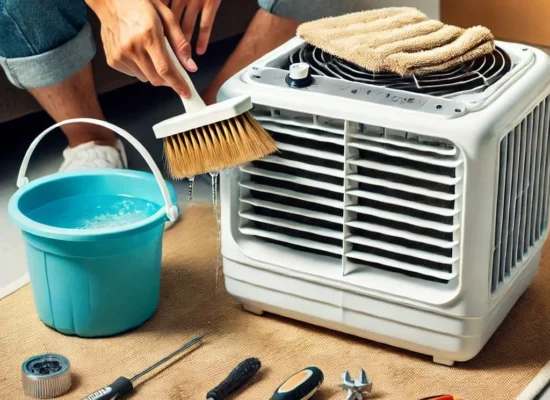
- Empty and clean the water tank according to the model’s instructions.
- Clean accessible surfaces using only the permitted cleaning method.
- Maintain or replace cooling pads only as specified by the manufacturer.
- Allow cleaned components to dry as instructed before returning the cooler to service.
Do not mix cleaning chemicals or use harsh products that may damage the appliance.
If the smell resembles burning plastic or overheated electrical insulation, do not treat it as an ordinary cleaning problem. Stop using the cooler and seek qualified assistance.
7. Air Cooler Will Not Start
A cooler that does not start may have a power-supply problem, a control or switch issue, or an internal electrical fault.
What you can check
- Confirm that the power supply is available.
- If the plug, socket, cable and surrounding area are dry and visibly undamaged, check the external connection without opening the appliance.
- Review the operating instructions to confirm the correct starting procedure.
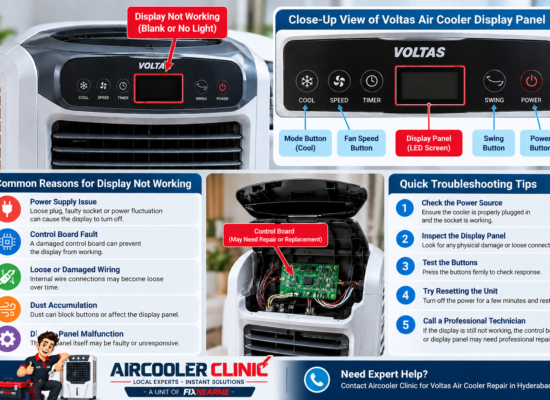
- Note whether the appliance shows any indicator light, display message or other external sign of operation.
Do not open the switch panel, inspect internal wiring, bypass a protective device or attempt electrical measurements.
If the plug or cable is damaged, the appliance sparks, or a circuit breaker repeatedly trips, discontinue use and arrange qualified inspection.
8. Air Cooler Is Overheating or Producing a Burning Smell
Overheating symptoms and burning odours should be treated seriously. They may indicate a motor-related fault, electrical problem, mechanical obstruction or another issue requiring inspection.
What you should do
- Switch off the cooler.
- Disconnect the power only if it is safe to do so.
- Do not restart the appliance to see whether the problem disappears.
- Keep the appliance out of use until the cause has been assessed.
Do not attempt to repair the motor, capacitor, wiring or other internal electrical parts yourself. If there is smoke or a fire, keep away and contact the appropriate emergency service.
Safe Air Cooler Maintenance to Reduce Common Problems
Regular maintenance may help identify developing problems and keep the cooler’s accessible parts clean. It cannot prevent every component failure.
Clean the water tank
Empty and clean the tank at the intervals and using the method specified in the manual. Do not leave stagnant water in the cooler for extended periods when the manufacturer recommends draining it.
Maintain the cooling pads
Inspect and clean the pads according to the instructions for your model. Replace them only when required and use a compatible part.
Keep the airflow path clear
Remove external obstructions and keep the area around the cooler clear. Do not insert tools or fingers through the grille.
Check the outside of the appliance
Look for visible damage to the casing, plug and cable before use. Do not use the appliance if you notice damaged wiring, burn marks, sparks or other signs of an electrical fault.
Follow the model-specific instructions
Different air coolers have different designs and maintenance requirements. The manufacturer’s manual should take precedence over generic troubleshooting advice.
When Should You Seek Professional Air Cooler Repair?
Arrange a suitable technical inspection when:
- The cooler still does not cool properly after permitted basic checks.
- Water does not circulate despite an adequate water level.
- Water continues to leak.
- The fan or blower fails to operate normally.
- Unusual noise or vibration persists.
- The cooler repeatedly stops, overheats or trips a circuit breaker.
- There is a burning smell, sparking, visible electrical damage or another safety concern.
An inspection helps distinguish a maintenance requirement from a component fault. The correct repair, parts requirement and cost cannot be determined reliably from the symptom alone.
Frequently Asked Questions
Why is my air cooler running but not cooling?
Possible causes include dirty cooling pads, poor water circulation, restricted airflow or high ambient humidity. Check the water level and accessible airflow path, then follow the manufacturer’s maintenance instructions. Persistent problems require further inspection.
Why is my air cooler fan working but the pump is not?
The pump may not be receiving water correctly, the water path may be obstructed, or the pump or its controls may have a fault. Check the water level and any permitted external indicators. Do not open the electrical section to investigate.
Can I clean my air cooler at home?
You can carry out maintenance that the manufacturer identifies as user-serviceable, provided the appliance is switched off and unplugged. Internal electrical repairs, motor work and other hazardous tasks should be left to appropriately qualified personnel.
Why does my air cooler smell bad?
Stagnant water, accumulated dirt or contaminated cooling pads may cause unpleasant odours. Clean accessible parts according to the manual. A burning or electrical smell is different and requires the appliance to be taken out of use.
When should I stop using my air cooler immediately?
Stop using it if you notice a burning smell, sparks, damaged wiring, repeated circuit-breaker trips, serious leakage near electrical parts, smoke or abnormal overheating. Do not restart it until the problem has been assessed appropriately.
Conclusion
Common air cooler problems include weak cooling, reduced airflow, water-circulation failure, leakage, unusual noise, bad smells and failure to start. Basic external checks and manufacturer-approved maintenance can help with some issues, but they cannot establish every fault.
Prioritise electrical safety, avoid dismantling internal components and seek qualified assistance when a problem persists or presents a safety risk.
For additional troubleshooting topics, browse the Air Cooler Maintenance and Troubleshooting category.
If you need assistance with a persistent air cooler problem, contact Aircooler Clinic on 79971 00067 or email aircoolerclinic@gmail.com to enquire about doorstep service availability for your location.
Aircooler Clinic is a unit of FIXNEARME providing doorstep air cooler services in Hyderabad and applicable service areas. Aircooler Clinic does not operate a separate physical service center. Service availability should be confirmed before booking.