Why Is Your Kenstar Air Cooler Not Cooling Properly? Causes and Safe Fixes
If your Kenstar air cooler is running but not providing enough cooling, the problem may be caused by a low water level, dirty cooling pads, restricted airflow, poor ventilation, water-circulation problems or high humidity. A fan that runs normally does not necessarily mean the evaporative cooling system is working correctly.
Start with the safe checks you can perform without opening the appliance. If the cooler continues to provide weak cooling, or you notice an electrical fault, abnormal motor noise or a water-pump problem, professional inspection may be necessary.
Why Is Your Kenstar Air Cooler Not Cooling Properly?
An air cooler uses evaporative cooling. Air passes through water-saturated cooling media, allowing some of the water to evaporate and helping reduce the temperature of the moving air. The process depends on adequate water circulation, clean cooling media, sufficient airflow and suitable ventilation.
Kenstar’s official cooling-efficiency guidance also highlights water level, cleaning, placement and cooling-pad condition as important factors.
1. The Water Level Is Too Low
When the water level is insufficient, the cooling pads may not receive enough water to remain properly wet. The fan can continue to blow air even though the cooling effect is reduced.
What to check:
- Look at the water-level indicator, if your model has one.
- Confirm that the tank contains sufficient water according to the user manual.
- Avoid overfilling the tank or exceeding the recommended level.
If the tank contains enough water but the pads remain dry during normal cooling operation, a water-circulation problem may be responsible.
2. The Cooling Pads Are Dirty or Clogged
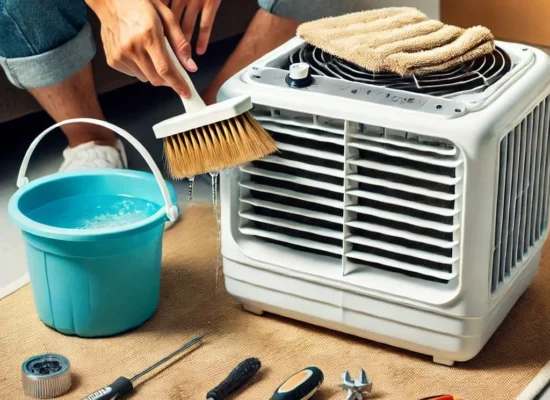
Dust, dirt and mineral deposits can accumulate on cooling pads over time. This buildup may restrict airflow or interfere with effective water distribution.
What to check:
- Switch off and unplug the cooler before inspecting accessible components.
- Look for obvious dirt, heavy deposits or visible pad deterioration.
- Clean removable pads only as instructed in the manual for your particular model.
If the pads remain clogged, damaged or ineffective after appropriate cleaning, replacement may be necessary. There is no single replacement interval that applies to every Kenstar model.
3. Water Is Not Reaching the Cooling Pads
A tank can contain sufficient water while the cooling pads remain inadequately wetted. A blocked water passage, a pump fault or another water-distribution problem may be responsible.
What to check:
Observe whether the pads become wet during normal operation, provided this can be checked without opening the appliance or approaching moving parts. If the pads remain dry despite an adequate water level, stop troubleshooting internally and arrange an inspection.
Do not remove the pump, handle internal wiring or attempt to test the pump using a direct electrical connection.
For a more focused explanation, see our Kenstar air cooler water-pump troubleshooting guide.
4. Airflow Is Restricted
An air cooler may produce less effective cooling when dust or external obstructions restrict air intake or outlet airflow.
What to check:
- Remove objects blocking the air inlet or outlet.
- Look for visible dust accumulation on accessible surfaces.
- Check whether the airflow feels noticeably weaker than usual.
- Confirm that accessible panels are correctly fitted after any permitted cleaning.
If airflow is weak despite unobstructed vents, the fan, motor or another internal component may require inspection.
5. The Room Does Not Have Adequate Ventilation
Unlike a conventional air conditioner, a direct evaporative cooler adds moisture to the air it supplies. Adequate ventilation helps move warm, humid air out of the room.
Position the cooler near a suitable open window or doorway, following the manufacturer’s placement guidance, and provide an appropriate path for air to leave the space.
Running an evaporative cooler in a tightly closed room can make the space feel increasingly humid and reduce comfort. The U.S. Department of Energy explains this ventilation requirement in its guide to evaporative coolers.
6. High Humidity Is Reducing Cooling Performance
Evaporative cooling depends on water evaporating into the surrounding air. When the air is already humid, evaporation becomes less effective.
Consequently, a Kenstar cooler may operate normally yet provide less noticeable cooling during humid weather. This does not automatically indicate a damaged pump, fan or motor.
Improve ventilation where practical and assess the cooler’s performance under the prevailing conditions before assuming that a component has failed.
7. The Fan or Motor May Have a Technical Fault
If the cooler has an adequate water supply and apparently clean pads but airflow is weak, intermittent or absent, a fan or motor problem may be involved.
Possible warning signs include:
- The fan does not start or stops unexpectedly.
- Airflow is substantially weaker than usual.
- The appliance makes unusual mechanical noises.
- Operation becomes intermittent despite normal external conditions.
These symptoms do not establish a specific diagnosis. Do not open the motor housing, inspect live electrical connections or replace internal parts yourself. Arrange a qualified inspection when a mechanical or electrical fault is suspected.
Safe Checks You Can Perform at Home
Use this checklist before arranging a repair:
- Check the water level. Follow the level markings and instructions for your Kenstar model.
- Inspect accessible cooling pads. Look for dirt, mineral deposits or visible damage.
- Check external airflow. Remove objects obstructing the air inlet and outlet.
- Improve ventilation. Provide a suitable source of fresh air and an outlet for humid air.
- Observe normal operation. Note whether airflow is weak, intermittent or accompanied by unusual noises.
- Look for visible leaks or damage. Do not dismantle the appliance to investigate further.
Always switch off and unplug the cooler before cleaning or inspecting accessible components. Follow the owner’s manual for model-specific instructions.
When to Stop Using the Cooler
Stop using the appliance if you notice a burning smell, sparking, exposed or damaged wiring, water entering an electrical area or another obvious electrical hazard. If safe to do so, disconnect power without touching wet or damaged electrical components and arrange professional inspection.
Do not attempt electrical repairs, internal motor testing, capacitor replacement or pump wiring work yourself.
What If the Basic Checks Do Not Restore Cooling?
Use the symptoms to decide what to do next.
Observed symptom | Possible explanation | Appropriate next step |
Fan runs, but cooling is weak | Low water, dirty pads, poor ventilation or high humidity | Check the water level, pad condition and room ventilation |
Pads remain dry | Water circulation or distribution problem | Arrange inspection if the water level is adequate |
Airflow is unusually weak | Obstructed vents or an internal fan or motor fault | Clear external obstructions; seek inspection if the problem persists |
Cooling varies with weather | Environmental humidity may be affecting evaporation | Improve ventilation and reassess performance |
Unusual noise, burning smell or electrical symptoms | Possible mechanical or electrical fault | Stop use when safety is in question and arrange professional inspection |
These are possible explanations, not confirmed diagnoses. If the cooler remains ineffective after safe checks, a technician may need to examine water circulation, the fan and motor, internal airflow, electrical controls or damaged components.
For broader troubleshooting, see our air cooler not cooling properly guide.
How to Prevent Kenstar Air Cooler Cooling Problems
Keep the Water System Clean
Clean the tank and accessible water-related components according to the manufacturer’s instructions. Refresh the water as appropriate for your model and usage, and avoid leaving stagnant water for extended periods.
Maintain the Cooling Pads
Inspect the pads during regular use. Clean or replace them according to their condition and the manufacturer’s guidance. Do not assume that every pad requires replacement after the same number of months.
Keep Airflow Unobstructed
Keep the air inlet and outlet clear. Position the cooler where it can receive adequate air circulation and provide ventilation for the room.
Follow Model-Specific Maintenance Instructions
Kenstar models can differ in their components and maintenance requirements. Consult the supplied user manual before removing panels, selecting cleaning products or replacing parts.
For a broader routine, read our Kenstar air cooler maintenance guide and step-by-step air cooler cleaning guide.
Frequently Asked Questions
Why is my Kenstar air cooler running but not cooling?
Possible causes include low water, dirty cooling pads, poor ventilation, high humidity or a water-circulation problem. Check the safe external conditions first. If the problem persists, arrange professional inspection.
Does low water affect Kenstar air cooler cooling?
Yes. Insufficient water can prevent the cooling pads from remaining adequately wet, reducing evaporative cooling. Follow the water-level guidance for your model.
Can dirty cooling pads make a Kenstar cooler less effective?
Yes. Dust and mineral deposits may restrict airflow or interfere with water distribution. Clean the pads according to the manufacturer’s instructions and replace them if their condition warrants it.
Why does my cooler blow air that does not feel cool?
The fan may be moving air even when evaporation is limited. Dry pads, poor water circulation, restricted airflow, insufficient ventilation or high humidity may explain the symptoms.
Should I replace Kenstar cooling pads every year?
Not necessarily. Replacement depends on the pad’s condition, the specific model and the manufacturer’s instructions. Inspect the pads and replace them when cleaning no longer restores their intended function or they are damaged.
Can I repair a Kenstar air cooler water pump myself?
Internal pump repair should not be treated as a routine DIY task. Avoid opening the pump assembly or handling electrical connections. Arrange inspection if water does not circulate correctly.
When should I contact Kenstar support?
Contact the manufacturer when you need model-specific instructions, warranty clarification or official product support. Use the Kenstar Service & Support page for current complaint-booking and contact options.
Can Aircooler Clinic service my Kenstar air cooler in Hyderabad?
Aircooler Clinic is a unit of FIXNEARME providing doorstep air cooler services in Hyderabad and applicable service areas. It does not operate a separate physical service center. Confirm that service is available for your location and appliance before arranging a visit.
Conclusion
A Kenstar air cooler that is not cooling properly may have a maintenance-related issue, an environmental limitation or an internal fault. Start by checking the water level, accessible cooling pads, external airflow and room ventilation. If these checks do not help, avoid guessing which component has failed and arrange an appropriate inspection.
For air cooler repair or maintenance enquiries in Hyderabad, contact Aircooler Clinic at 7997100067 or aircoolerclinic@gmail.com. Confirm doorstep service availability for your location before booking.
Aircooler Clinic is a unit of FIXNEARME and operates as a doorstep/service-area business, not as a separate walk-in service center.