How to Maintain Your Kenstar Air Cooler for Long-Lasting Performance
A Kenstar air cooler needs regular cleaning, adequate airflow and proper water management to work effectively. Dust on the air filter, dirty cooling pads, stagnant water and restricted ventilation can affect cooling performance and contribute to unpleasant smells.
The best way to maintain your Kenstar air cooler is to clean the water tank and accessible filters and pads according to the model’s instructions, use the recommended water level, check for visible blockages and dry the unit properly before storing it for the off-season. Always disconnect the appliance from its power supply before cleaning, and leave electrical or internal mechanical repairs to a qualified technician.
Why Regular Kenstar Air Cooler Maintenance Matters
Routine maintenance helps keep the cooler clean and allows you to identify developing problems before they become more serious.
Regular care can help you:
- Maintain unobstructed airflow through the filter and cooling pads.
- Reduce unpleasant smells associated with stagnant water and accumulated dirt.
- Limit the buildup of dirt and mineral deposits in the tank.
- Identify damaged pads, visible leaks or other signs of wear.
- Prepare the appliance for seasonal use and storage.
Maintenance cannot guarantee a particular lifespan or prevent every breakdown. The results depend on the cooler’s model, condition, usage, water quality and the care it receives.
1. Clean the Air Filter and Cooling Pads
Air filters and cooling pads can collect dust and other deposits during regular use. When airflow becomes restricted, the cooler may not perform as expected.
How to clean them safely
- Switch off the cooler and disconnect it from the electrical supply.
- Consult the user manual for instructions on accessing the filter and cooling pads.
- Remove only the parts that the manufacturer identifies as user-removable.
- Clean the accessible filter and pads using the method recommended for your model. If rinsing is permitted, use clean water and avoid damaging the material.
- Check for visible damage, heavy deposits or deterioration.
- Allow cleaned parts to drain and dry as directed by the manufacturer.
- Reinstall the parts correctly before using the cooler again.
Do not force a pad out of its frame, use harsh chemicals without manufacturer approval or assume that every filter or cooling pad can be washed.
If a pad remains clogged, deteriorated or ineffective after appropriate cleaning, check the manual for replacement guidance.
2. Empty and Clean the Water Tank
Water left standing in a cooler can become dirty and develop an unpleasant smell. Dust and mineral deposits can also accumulate in the tank over time.
Recommended cleaning procedure
- Turn off and unplug the cooler.
- Drain the water using the intended drain outlet or the method described in the user manual.
- Remove loose dirt from accessible tank surfaces using a suitable soft cloth or cleaning tool.
- Use only a cleaning product permitted by the manufacturer.
- Rinse the tank as directed, ensuring that no cleaning residue remains where it could affect the water or appliance.
- Check the accessible tank area for visible cracks, deposits or damage.
- Refill with clean water when the tank is ready for use and follow the specified water-level markings.
Avoid flooding the cooler’s electrical or control areas. Do not mix cleaning chemicals or use a descaling product unless it is suitable for the materials and approved for the appliance.
If you notice persistent deposits, leakage or damage, arrange an appropriate inspection rather than dismantling the unit.
3. Use the Correct Water Level and Replace Water Regularly
The amount of water required depends on the cooler’s design. Too little water can interfere with water circulation in models that use a pump, while overfilling can cause spillage or leakage.
For better water management:
- Follow the minimum and maximum water-level markings, if provided.
- Use the water type specified in your model’s instructions.
- Replace dirty or stale water and clean the tank when necessary.
- Avoid leaving water standing in the cooler during extended periods when it is not being used.
- Check for visible leakage before operating the appliance.
Do not assume that every Kenstar model has the same tank capacity, water-level requirement or pump arrangement.
4. Keep Airflow Unrestricted
Evaporative air coolers need appropriate ventilation to deliver effective cooling. A poorly positioned cooler may circulate air less effectively, even when its components are clean.
For better airflow:
- Place the cooler in a suitably ventilated area.
- Keep the air intake and outlet clear of curtains, furniture and other obstructions.
- Clean accessible exterior grilles when dust accumulates.
- Use the fan-speed setting appropriate for your needs and the available ventilation.
- Follow the placement instructions in the user manual.
In a typical evaporative-cooling setup, providing a path for fresh air to enter and warm air to leave the room helps avoid excessive indoor humidity and supports cooling performance.
If airflow remains weak despite cleaning and removing visible obstructions, the cause may require inspection.
5. Check the Fan and Exterior Without Opening the Appliance
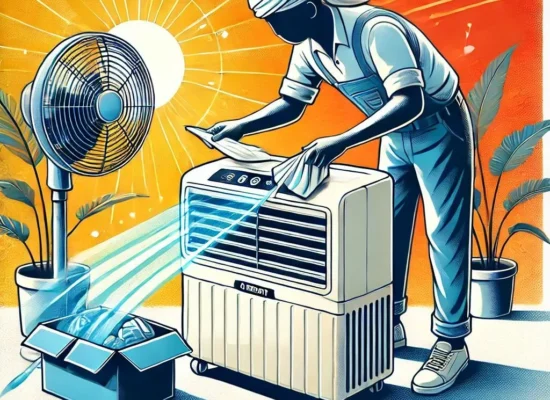
Dust on accessible exterior surfaces can be removed with a soft cloth. Keep the cooler’s vents clear and inspect the outside of the appliance for visible damage.
Before cleaning, always disconnect the power supply.
You can safely observe whether:
- The outer casing is damaged.
- Air intake or outlet grilles are visibly obstructed.
- The cooler is standing securely on a level surface.
- There are unusual noises or vibrations during operation.
- Water is leaking from the appliance.
Do not reach inside to move fan blades, adjust motor alignment, tighten internal components or lubricate motor bearings. These tasks can expose you to electrical or mechanical hazards and may require model-specific technical knowledge.
If the fan rubs against another part, fails to rotate normally or produces unusual grinding sounds, stop using the cooler and arrange an inspection.
6. Understand Cooling-Pad, Pump and Motor Warning Signs
Not every performance problem is caused by dirt. A cooler that does not circulate water, produces unusual sounds or continues to deliver weak airflow after cleaning may have a component-related fault.
If the cooler is not cooling effectively
Check the water level, visible cleanliness of the filter and pads, and whether the cooler has adequate ventilation. If these basic conditions are satisfactory but performance remains poor, further inspection may be necessary.
If water is not reaching the cooling pads
A water-circulation problem may involve the pump, water-distribution system, tubing or another component. Do not remove the pump, open electrical compartments or attempt direct electrical testing.
Read the dedicated guide to Kenstar air cooler water-pump troubleshooting.
If the cooler makes unusual noises
Rattling, grinding or other abnormal sounds may indicate a mechanical obstruction, loose component or internal fault. The sound alone does not establish the diagnosis.
Switch off the appliance if the noise is unusual or severe. See the guide to what to do when a Kenstar cooler makes unusual noises.
If the cooler leaks water
Stop using the cooler if water reaches electrical components or creates an electrical hazard. Do not handle wet electrical connections. Arrange a safe inspection to identify the source of the leak.
7. Follow a Practical Maintenance Schedule
There is no single schedule that is suitable for every Kenstar air cooler. Use the user manual as the primary reference and adjust routine cleaning according to dust, usage and water quality.
When | Maintenance task |
Before each use | Check the visible water level, ventilation and any obvious signs of leakage or damage. |
During regular use | Observe airflow, water circulation where applicable, unusual smells and abnormal noises. |
Regularly during the season | Clean accessible exterior surfaces and inspect the filter, pads and tank according to the manual and the amount of dirt accumulated. |
When changing water or cleaning the tank | Remove stale water and clean the tank as directed. |
When performance changes | Check safe, visible conditions first; arrange an inspection if the issue persists. |
Before off-season storage | Drain, clean and dry the cooler according to the manufacturer’s storage instructions. |
For additional general guidance, see how often to clean an air cooler.
8. Prepare Your Kenstar Air Cooler for Off-Season Storage
Leaving a cooler damp and dirty during long periods of non-use can contribute to unpleasant smells and deposits when it is started again.
Before storing the appliance:
- Switch it off and disconnect it from the power supply.
- Drain the tank using the intended drainage method.
- Clean the accessible tank, filter and pads as directed by the manufacturer.
- Allow the relevant components to dry as instructed.
- Check the exterior for damage and address any unresolved problems before the next season.
- Store the cooler in a dry, suitable location protected from excessive dust and moisture.
- Use a cover that allows appropriate ventilation if recommended for the appliance.
Do not store the appliance with water remaining in the tank unless the manufacturer specifically instructs otherwise. Follow the manual for removing, drying or reinstalling components.
9. Common Kenstar Air Cooler Maintenance Mistakes to Avoid
Avoid these practices when maintaining your cooler:
- Cleaning while connected to power: Disconnect the appliance before cleaning or handling removable parts.
- Using unapproved chemicals: Some cleaners can damage plastic, seals, pads or other materials.
- Overfilling the tank: Follow the specified water-level markings.
- Ignoring persistent odours: Dirty water or deposits may need cleaning; recurring odours may require further investigation.
- Forcing components apart: Use only the removal and cleaning procedures described in the manual.
- Lubricating the motor without instructions: Do not assume that the motor or bearings require user lubrication.
- Opening electrical compartments: Wiring, capacitors, motors and internal electrical parts should be handled by appropriately qualified personnel.
- Continuing to use a damaged or leaking cooler: Stop using the appliance when the problem creates a safety risk and arrange an inspection.
10. When Should You Seek Professional Assistance?
Routine cleaning is appropriate when the manufacturer identifies the task as user maintenance. Internal faults and persistent problems require a different approach.
Consider arranging an inspection if:
- The cooler does not start after safe external checks.
- The fan does not rotate normally.
- Water circulation remains poor despite adequate water and routine cleaning.
- There is persistent leakage or visible component damage.
- The appliance produces grinding, burning or other abnormal smells.
- You notice sparks, a damaged power cord, electrical shocks or repeated electrical interruptions.
If you notice sparks, a burning smell or an electrical shock, stop using the appliance immediately and disconnect power only if this can be done safely. Do not touch wet electrical areas or attempt to repair the fault yourself.
For official manufacturer support, consult Kenstar Service & Support for the current contact and complaint options.
For applicable doorstep air cooler maintenance or repair enquiries in Hyderabad, you can also contact Aircooler Clinic through its complaint-booking page. Aircooler Clinic is a unit of FIXNEARME and operates as a doorstep/service-area business; it does not operate a separate physical service center. Confirm service availability for your location and appliance before arranging work.
Frequently Asked Questions
How often should I clean my Kenstar air cooler?
The appropriate frequency depends on the model, usage, dust levels and water quality. Follow the user manual and inspect the filter, cooling pads and tank regularly during use. Clean them when required using the approved method.
Can I wash Kenstar air cooler cooling pads?
Only clean the pads using the method permitted for your specific model. Some pads may be rinsed, but you should not assume that all materials can be washed or scrubbed in the same way.
Why does my Kenstar air cooler smell bad?
Possible causes include stale water, dirt or deposits in the tank and cooling pads. Disconnect the appliance, clean the accessible components according to the manual and replace stale water. If the smell persists or resembles burning, stop using the cooler and arrange an inspection.
Why is my Kenstar air cooler not cooling properly?
Possible causes include restricted airflow, dirty cooling pads, an unsuitable water level, poor water circulation or a component fault. Check safe external conditions first. If cleaning and ventilation do not resolve the problem, do not assume the cause without inspection.
Should I lubricate the motor of my Kenstar air cooler?
Do not lubricate the motor unless the instructions for your specific model explicitly require it and describe an appropriate procedure. Internal motor and bearing maintenance should be handled by a qualified technician when necessary.
Can I add ice to the water tank?
Use ice or chilled water only when permitted by your model’s instructions. If the cooler has a designated ice chamber, follow the manufacturer’s directions for using it. Do not assume that adding ice is suitable for every model.
What should I do if the water pump stops working?
Check only safe external conditions, such as whether the tank contains the appropriate amount of water. Disconnect the cooler before any permitted cleaning. If water circulation does not resume, arrange an inspection rather than opening the pump or testing electrical connections.
How should I store my Kenstar air cooler after summer?
Drain and clean the tank, clean accessible components according to the manual, allow the appliance and relevant parts to dry as directed, and store the cooler in a suitable dry location. Follow the manufacturer’s instructions for removable pads and covers.
Conclusion
Regular tank cleaning, appropriate cooling-pad care, adequate ventilation, correct water levels and proper seasonal storage are the foundations of Kenstar air cooler maintenance. Use the model-specific manual for cleaning methods and maintenance intervals, and avoid unapproved motor lubrication or internal electrical repairs.
If the cooler continues to leak, make abnormal noises, circulate water poorly or deliver weak airflow after routine maintenance, arrange an appropriate inspection rather than assuming the cause. Safe, consistent care can help keep the appliance clean and ready for use without risking damage through unsuitable maintenance.