Common Mistakes That Can Damage a McCoy Air Cooler—and How to Avoid Them
A McCoy air cooler can provide effective evaporative cooling when it is used and maintained correctly. However, simple habits such as overfilling the tank, neglecting the cooling pads, restricting airflow or leaving water standing for long periods can affect performance.
The good news is that many maintenance problems can be prevented with routine care. The most important approach is to follow the instructions for your particular McCoy model and avoid making assumptions about faults before the cooler has been inspected.
Quick Answer: Which Mistakes Should McCoy Air Cooler Owners Avoid?
The main mistakes to avoid are:
- Filling the water tank beyond its marked level.
- Ignoring the recommended cleaning routine.
- Operating the cooler in a poorly ventilated space.
- Blocking the cooler’s air intake or outlet.
- Leaving water in the tank for long periods when the cooler is not being used.
- Continuing to operate the appliance when it shows unusual electrical, mechanical or leakage symptoms.
- Attempting internal electrical or motor repairs without appropriate expertise.
McCoy’s published use-and-care manual recommends periodic maintenance, draining the water and cleaning the honeycomb pads monthly, completely draining the tank after the cooling season, and unplugging the appliance before maintenance to reduce electrical risk.
1. Overfilling the Water Tank
One common mistake is filling the tank beyond the level intended for the particular cooler.
Excess water can spill or leak and create unnecessary mess around the appliance. The correct level depends on the cooler’s design, so do not assume that filling the tank completely is appropriate for every model.
Better practice: use the tank’s level indicator or the instructions supplied with your McCoy model.
If water continues to leak even when the tank is filled correctly, stop treating it as a simple water-level issue. A damaged tank, fitting, hose, pump or another component may require inspection.
2. Ignoring the Cooling Pads and Water Tank
Dust, mineral deposits and accumulated residue can affect the condition and performance of an air cooler.
McCoy’s use-and-care manual recommends draining the water and cleaning the honeycomb pads every month. It also recommends completely draining the tank after the season.
Do not assume that every cooler needs exactly the same cleaning schedule. Water quality, dust exposure, usage and the particular model can affect maintenance needs.
Better practice:
- Clean the cooling pads according to the manufacturer’s instructions.
- Keep the water tank clean.
- Drain the tank when the cooler is being stored after the season.
- Inspect accessible filters or screens if your model has them.
- Never perform cleaning while the appliance is connected to power.
3. Running the Cooler Without Adequate Ventilation
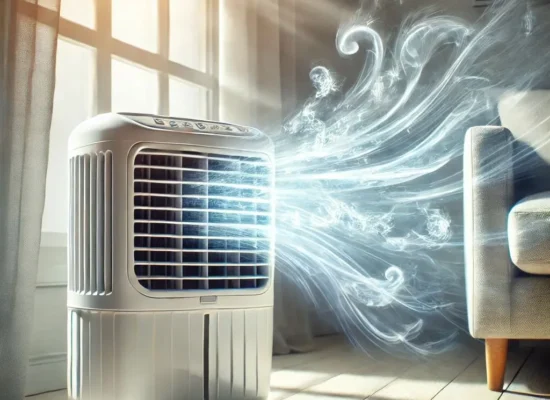
An evaporative cooler needs appropriate airflow through the space. If the room is tightly closed, humidity can build up and cooling effectiveness can decline.
For that reason, an air cooler is generally better suited to a space where air can enter and humid air can leave.
Better practice: use an open window, door or another suitable ventilation arrangement that allows air movement through the room.
Simply moving the cooler closer to a wall does not solve a ventilation problem. The placement should allow the cooler to draw and discharge air without unnecessary obstruction.
4. Blocking Airflow Around the Cooler
Furniture, curtains, walls or other objects can interfere with airflow if they are placed too close to the cooler.
Reduced airflow can make the cooler feel less effective even when the water level and cooling pads are otherwise acceptable.
Check safely: with the appliance switched off, make sure visible air inlets and outlets are not obstructed.
If airflow remains weak after removing obvious external obstructions, the problem may require further inspection.
5. Treating Every Cooling Problem as a Water-Level Problem
Low water is one possible reason for poor cooling, but it is not the only one.
Other possible causes include:
- Dirty or deteriorated cooling media.
- Poor ventilation.
- Restricted airflow.
- Water-circulation problems.
- Fan or motor problems.
- Other component faults.
Therefore, repeatedly adding water is not an appropriate solution when the cooler continues to perform poorly.
Better approach: check the water level, ventilation and visible condition of the cooler first. If the problem persists, arrange a professional inspection rather than guessing at the failed component.
6. Ignoring Unusual Noise or Vibration
A new or persistent unusual noise should not automatically be treated as normal operation.
Depending on the symptom, possible causes can include an obstruction, loose component, fan problem or another mechanical issue.
Do not open the appliance or attempt motor or electrical repairs simply because the source of the sound is not obvious.
If the cooler develops persistent grinding, rattling, buzzing or abnormal vibration, switch it off and seek appropriate service if the issue does not disappear after safe external checks.
7. Continuing to Use a Cooler That Is Leaking
A small amount of water in the wrong place can be a warning sign rather than a routine maintenance issue.
First check whether the tank has simply been filled beyond its intended level. If the leakage continues at the correct water level, the cause may be elsewhere.
Possible causes can include a damaged tank, connection, hose, drainage component or water-circulation component.
Do not disassemble electrical or internal components to locate the leak. If the source cannot be identified safely, professional inspection is the better option.
8. Cleaning Without Disconnecting Power
Cleaning an air cooler involves water and an electrical appliance, so basic electrical safety matters.
McCoy’s use-and-care manual instructs users to unplug the appliance before maintenance to avoid electrical hazards.
Before cleaning:
- Switch the cooler off.
- Disconnect it from the power supply.
- Follow the cleaning instructions for your particular model.
- Make sure components that should remain dry are protected according to the manufacturer’s instructions.
- Do not reconnect the appliance until it is safe to operate.
Never attempt to repair wiring, motors, switches, capacitors or other electrical components as a routine DIY task.
9. Leaving Water in the Cooler After the Season
If an air cooler will not be used for an extended period, leaving water standing in the tank is poor maintenance practice.
McCoy’s manual recommends completely draining the tank after a season of use.
Before seasonal storage, follow the manufacturer’s instructions for:
- draining the tank,
- cleaning the cooling media,
- cleaning accessible components,
- drying the appropriate areas, and
- storing the cooler safely.
This is preferable to allowing unused water to remain in the tank for a prolonged period.
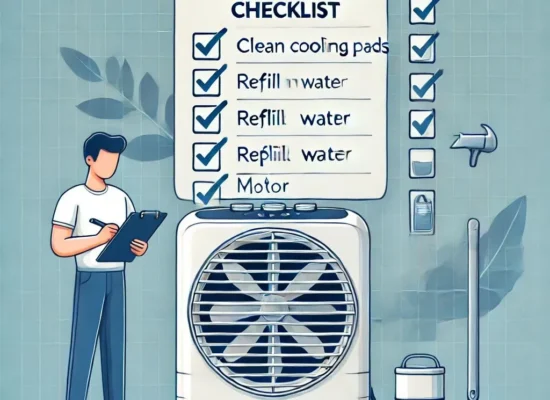
A Simple McCoy Air Cooler Maintenance Checklist
Use this checklist as a general reminder, while giving priority to the instructions for your specific McCoy model.
Before regular use
- Check the water level.
- Make sure airflow around the cooler is not blocked.
- Look for visible leakage.
- Check for unusual noise or vibration.
- Make sure the power cord and plug appear safe to use.
During routine maintenance
- Drain and clean the tank as recommended.
- Clean the cooling pads according to the manufacturer’s instructions.
- Clean accessible filters or screens where applicable.
- Keep the exterior and air passages free of excessive dust.
- Unplug the appliance before cleaning.
At the end of the cooling season
- Drain the tank completely.
- Clean the cooling media according to the manual.
- Prepare the cooler for storage as instructed by the manufacturer.
What If Your McCoy Air Cooler Is Still Not Cooling?
Start with the safe checks:
- Confirm that there is sufficient water according to the cooler’s indicator.
- Check whether the room has adequate ventilation.
- Look for obvious external airflow obstruction.
- Check whether the cooling pads appear excessively dirty.
- Listen for unusual noises or signs of abnormal operation.
If the cooler still does not cool properly, avoid assuming that one particular component has failed.
A professional inspection may be appropriate when the problem involves persistent poor cooling, water leakage, abnormal noise, pump or motor symptoms, electrical concerns or another fault that cannot be safely checked from outside the appliance.
When Should You Contact a Professional?
Professional service is appropriate when:
- The cooler repeatedly leaks.
- The fan or motor behaves abnormally.
- The water pump appears not to circulate water correctly.
- The cooler produces persistent unusual noise.
- There are electrical symptoms.
- Basic safe maintenance does not resolve the performance problem.
- Internal parts need to be repaired or replaced.
A technician can determine the likely cause instead of relying on symptoms alone.
Frequently Asked Questions
How often should I clean a McCoy air cooler?
McCoy’s published use-and-care manual recommends draining the water and cleaning the honeycomb pads every month. Always follow the instructions supplied with your particular model if they differ.
Can overfilling a McCoy air cooler cause problems?
Yes. Filling beyond the intended level can result in water spilling or leaking. Use the water-level indicator or your model’s instructions rather than filling beyond the recommended level.
Does an air cooler need ventilation?
Yes. Air coolers generally perform better when the space allows appropriate air movement and ventilation. A tightly closed room can become more humid and reduce cooling effectiveness.
Why is my McCoy air cooler not cooling properly?
Possible causes include dirty cooling media, insufficient water, poor ventilation, restricted airflow or a mechanical or water-circulation problem. The symptom alone does not establish the exact cause.
Should I leave water in my McCoy cooler after summer?
McCoy’s use-and-care manual recommends completely draining the water tank after the season.
Can I repair the motor or wiring myself?
Internal motor, wiring and other electrical repairs should not be treated as routine DIY maintenance. Unplug the appliance and seek appropriate professional assistance when an electrical or internal mechanical fault is suspected.
What should I do if my McCoy cooler is leaking?
First stop the appliance and check whether the tank has been filled beyond its intended level. If leakage continues at the correct level, professional inspection may be needed to identify the actual source.
Final Takeaway
Most avoidable air-cooler problems come down to basic care: use the correct water level, keep the cooling system clean, provide adequate ventilation, avoid blocking airflow and drain the appliance when it is being stored for the off-season.
For anything involving electrical components, internal mechanical parts, persistent leakage, abnormal motor behaviour or a fault that cannot be safely identified, avoid risky DIY repair.
Aircooler Clinic is a unit of FIXNEARME providing doorstep/service-area air-cooler services in applicable Hyderabad service areas. It does not operate a separate physical Aircooler Clinic service center. If your McCoy air cooler needs professional attention, contact Aircooler Clinic at 7997100067 or aircoolerclinic@gmail.com and confirm service availability for your location.