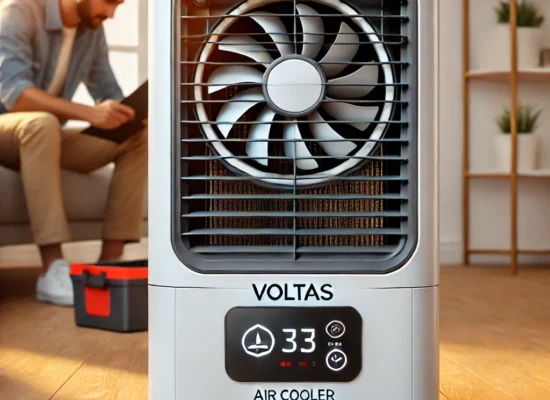

Common Usha Air Cooler Problems: Safe Troubleshooting and Maintenance Guide
Is your Usha air cooler blowing warm air, producing weak airflow, leaking water, making unusual noises, or failing to start? These symptoms can have different causes. Some problems may be related to water levels, cooling-pad condition, airflow or operating settings, while others require professional inspection.
This guide explains what you can safely check at home, how to maintain your cooler according to the manufacturer’s instructions, and when to stop troubleshooting and seek assistance.
Safety first: Switch off and unplug your air cooler before cleaning, refilling, draining or inspecting accessible components. Never attempt electrical repairs, capacitor testing, motor disassembly or internal wiring work yourself. Follow the instructions for your specific Usha model.
Quick Answer: What Should You Check First?
If your Usha air cooler is not working as expected:
- Check the water level if you are using the cooling function.
- Confirm that the appropriate operating and cooling settings are selected.
- Look for visible dust or obstructions around accessible air inlets and outlets.
- Check whether the room has suitable ventilation.
- Look for obvious external water leakage.
- Check for stale water or visible dirt if the cooler has an unpleasant smell.
- Stop using the appliance if you notice a burning smell, sparks, smoke, a damaged power cord or another electrical safety concern.
These checks can help identify simple maintenance issues, but they cannot confirm an internal component fault. For model-specific instructions, consult the manual supplied with your cooler.
1. Usha Air Cooler Is Not Cooling Properly
If the fan runs but the air does not feel sufficiently cool, several factors may be involved.
Low water level
Evaporative air coolers use water and cooling media to help cool the air. If the water level is too low, the cooling function may not work as expected.
What you can do:
- Switch off and unplug the cooler before refilling it.
- Check the water level indicator, if provided.
- Refill according to the maximum and minimum levels specified for your model.
- Do not operate the cooling function with an empty tank if the manufacturer warns against it.
Dirty or mineral-affected cooling pads
Dust and mineral deposits can accumulate on cooling media and restrict airflow. Usha’s maintenance guidance explains that cleaning requirements can vary with local water quality and operating conditions.
What you can do:
- Switch off and unplug the cooler.
- Inspect accessible cooling media for visible dirt or deposits.
- Clean them only as instructed in your model’s manual.
- Do not use harsh chemicals or unapproved cleaning solutions.
If the pads are damaged or cleaning does not improve performance, further inspection may be necessary.
Poor room ventilation
Evaporative coolers rely on air movement and evaporation. Their performance can be less satisfactory in a closed room with inadequate ventilation or high humidity.
What you can do:
- Provide suitable fresh-air circulation.
- Keep the air inlet and outlet unobstructed.
- Position the cooler according to the manufacturer’s instructions.
If the cooler still fails to cool properly, consult our guide to common reasons a Usha air cooler is not cooling.
2. Usha Air Cooler Has Weak or No Airflow
Weak airflow is different from airflow that feels insufficiently cool. A cooler may have a cooling problem even when its fan is operating normally.
Possible causes of weak airflow include restricted air passages, dust accumulation, an unsuitable speed setting or a mechanical problem.
Safe checks:
- Confirm that the cooler is switched on.
- Check the selected fan-speed setting.
- Look for obvious external obstructions around the air inlet and outlet.
- Check the power connection visually without opening the appliance.
- Make sure the cooler is positioned according to its operating instructions.
Do not insert your fingers or tools into the fan area, remove protective covers to reach moving parts, or attempt to repair the motor.
If the fan does not operate, airflow remains weak after basic checks, or the cooler produces unusual vibration, arrange professional inspection.
3. Usha Air Cooler Pump Is Not Circulating Water
On models equipped with a water pump, a circulation problem can reduce cooling performance.
Possible causes include an insufficient water level, a blocked water path or a pump-related fault. These are possibilities, not a confirmed diagnosis.
What you can safely check:
- Confirm that the tank contains sufficient water.
- Check the operating settings described in your model’s manual.
- Look for obvious external leakage or an accessible obstruction.
- Follow manufacturer-approved cleaning instructions if the relevant component is designed for user maintenance.
If water does not circulate after the permitted checks, stop troubleshooting and arrange professional inspection.
Do not open the pump, test electrical connections, bypass components or attempt internal wiring repairs.
4. Water Is Leaking From the Usha Air Cooler
Water leakage can result from several issues, including overfilling, a drainage problem, a damaged tank, a fitting issue or an internal water-system fault.
What you should do:
- Switch off and unplug the cooler.
- Check whether the water level exceeds the recommended maximum.
- Look for an obvious external source of leakage.
- Check whether the cooler is positioned on a stable, level surface.
- Follow the manual’s instructions for draining the tank if necessary.
Do not operate the cooler if water may be reaching electrical components. Avoid improvised repairs to cracked tanks, internal connections or pump assemblies.
If the leak continues or its source is unclear, professional inspection is appropriate.
5. Usha Air Cooler Is Making Unusual Noise
A new rattling, grinding, scraping or vibrating sound should not be ignored.
Possible causes include an external obstruction, a loose accessible component, a pump issue or a mechanical fault involving internal parts.
Safe approach:
- Switch off and unplug the cooler.
- Look for obvious external obstructions.
- Check the exterior for visible damage.
- Do not dismantle the fan, motor or electrical compartment.
If the noise persists, particularly alongside severe vibration, reduced airflow or a burning smell, stop using the appliance and seek professional assistance.
6. Usha Air Cooler Has a Bad or Musty Smell
An unpleasant smell can sometimes be associated with stale water, dirty cooling media or accumulated deposits.
What you can do:
- Switch off and unplug the cooler.
- Drain stale water according to the model’s instructions.
- Clean the accessible tank using the recommended method.
- Clean the cooling media as directed by the manufacturer.
- Refill with clean water before returning the cooler to normal use.
Do not automatically add disinfectants, fragrances, antibacterial products or household chemicals unless the manufacturer specifically approves them.
If the smell persists after proper cleaning, the appliance may need further inspection. Stop using it if the smell resembles burning or suggests an electrical fault.
7. Usha Air Cooler Will Not Turn On
A cooler that does not start may have a simple operating issue or a fault requiring technical diagnosis.
Check only the following:
- Whether the appliance’s external control is set correctly.
- Whether the power cord and plug show visible damage.
- Whether household power is available.
- Whether the cooler has been connected according to its operating instructions.
Do not use the appliance if the plug or cord is damaged. Do not open the electrical compartment to inspect wiring, switches, capacitors or control boards.
If the cooler remains unresponsive after safe external checks, arrange professional inspection rather than assuming that a particular component has failed.
8. Safe Maintenance for Better Usha Air Cooler Performance
Routine maintenance can help reduce avoidable problems, but the correct procedure and frequency depend on the cooler model, cooling-media type, water quality and operating conditions.
Keep the water tank clean
Drain and refresh the water as appropriate. Clean the tank according to the manufacturer’s instructions, especially after the cooler has remained unused for an extended period.
Maintain the cooling media
Inspect accessible cooling media for dirt and mineral deposits. Use the cleaning procedure specified for your model; do not assume every pad can be removed, washed or replaced in the same way.
Keep airflow unobstructed
Remove loose dust from accessible exterior areas while the appliance is unplugged. Keep the air inlet and outlet clear.
Check for visible damage
Before regular seasonal use, look for visible damage to the power cord, plug, housing and accessible water-system parts. Do not operate an appliance that appears unsafe.
Follow the model-specific manual
Usha publishes maintenance information for its air-cooler range. For example, its official FAQ explains how local water conditions can affect cooling-media cleaning requirements.
Read the official Usha Air Cooler FAQs and follow the instructions relevant to your particular model.
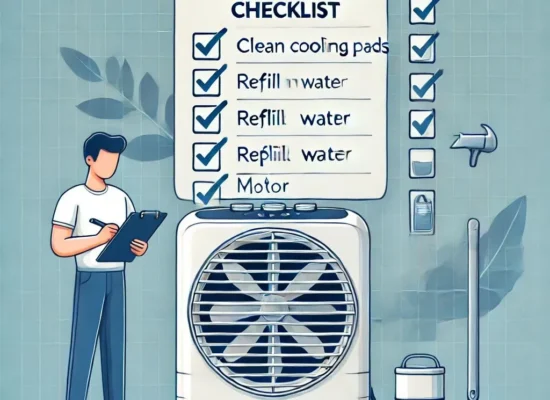
For a more detailed routine, see our Usha air cooler maintenance checklist.
9. When Should You Stop Using the Cooler?
Stop using the appliance and arrange appropriate professional inspection if you notice:
- Smoke or sparks.
- A burning or electrical smell.
- A damaged plug or power cord.
- Repeated electrical tripping.
- Water reaching electrical components.
- Severe vibration or persistent mechanical noise.
- A malfunction that continues after basic, manufacturer-approved checks.
Do not continue operating an appliance that may be electrically or mechanically unsafe.
Electrical wiring, capacitor testing, motor repairs, control-board work and internal component replacement are not appropriate routine DIY tasks.
10. When Is Professional Air Cooler Service Appropriate?
Professional inspection may be needed when:
- The cooler does not start after basic external checks.
- The fan does not operate normally.
- Water circulation remains ineffective.
- Leakage continues after simple checks.
- Unusual noise or vibration persists.
- Cooling performance remains poor despite appropriate maintenance.
- An internal electrical or mechanical fault is suspected.
A symptom alone does not establish which component has failed. The actual repair requirement should be determined through appropriate inspection.
If you are unsure whether a task is intended for ordinary users, consult the model manual or seek qualified assistance. Our guide to air cooler problems that may require a technician explains this distinction in more detail.
Frequently Asked Questions
Why is my Usha air cooler blowing air but not cooling?
Possible causes include insufficient water, cooling mode not being activated, dirty cooling media, poor ventilation, high humidity or a water-circulation problem. Check the settings, water level and accessible cooling media according to the manual.
Why is my Usha air cooler making a rattling sound?
An obstruction or mechanical problem may be responsible. Switch off and unplug the appliance, check for obvious external obstructions and arrange inspection if the sound continues.
Can I repair a Usha air cooler motor at home?
Motor repair should not be treated as a routine DIY task. Internal electrical and mechanical work should be handled by an appropriately qualified service professional.
Can I replace the air cooler capacitor myself?
Capacitor testing and replacement involve electrical hazards. Do not attempt the work yourself; seek qualified assistance.
How often should I clean my Usha air cooler?
The appropriate frequency depends on the model, water quality and operating conditions. Follow the maintenance instructions for your specific cooler rather than applying one fixed schedule to every model.
Why does my Usha air cooler smell bad?
Stale water, dirty cooling media or accumulated deposits may contribute to unpleasant odours. Drain and clean the cooler as instructed. If the smell persists or resembles burning, stop using the appliance and seek inspection.
Does a Usha air cooler need ventilation?
Yes. Evaporative cooling depends on evaporation and appropriate air circulation. Provide ventilation suitable for the room and the cooler’s operating instructions.
When should I call for Usha air cooler repair?
Seek professional assistance when basic checks do not resolve the issue, leakage continues, mechanical noise persists or the problem involves electrical or internal components.
Conclusion
Common Usha air cooler problems can involve water levels, cooling media, airflow, ventilation, leakage, odours or internal components. Begin with safe external checks and routine maintenance permitted by your model’s manual.
Do not assume that a symptom identifies a specific fault. If the cooler remains faulty or shows signs of electrical or mechanical danger, stop using it and arrange appropriate inspection.
Need Usha Air Cooler Repair or Maintenance in Hyderabad?
Aircooler Clinic is a unit of FIXNEARME providing doorstep air cooler services in Hyderabad and applicable service areas. Service availability depends on your location, cooler model, technician availability and the nature of the problem.
Call: 7997100067
Email: aircoolerclinic@gmail.com
Contact the team to check whether your location and cooler are currently serviceable before arranging an appointment.