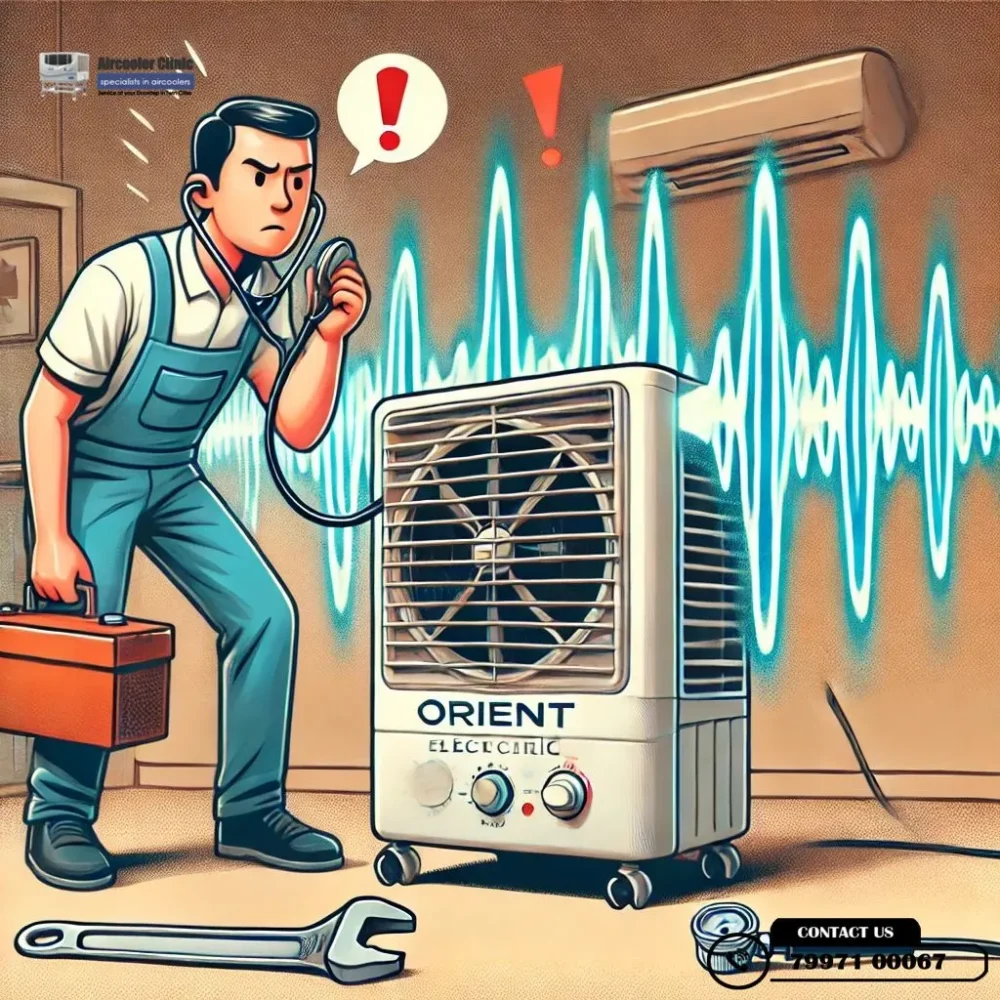
How to Fix Unusual Noise in an Orient Electric Air Cooler: Safe Troubleshooting Guide
Is your Orient Electric air cooler making a rattling, buzzing, humming, grinding or vibrating sound? Unusual noise can have several possible causes, including an obstruction, unstable placement, a fan or blower problem, a water-pump issue or another mechanical fault.
Start by switching off and unplugging the cooler before checking accessible external areas. Make sure all moving parts have stopped. You can check for visible obstructions, confirm that the cooler stands securely and observe the water level according to your model’s instructions. Do not open the motor or electrical compartment to investigate the noise.
The sound alone cannot confirm which component is faulty. If the noise persists, becomes severe or is accompanied by a burning smell, smoke, sparking or unusual overheating, stop using the cooler and arrange professional inspection.
What Kind of Noise Is Your Orient Electric Air Cooler Making?
The sound and the circumstances in which it occurs can help narrow down the possible causes. The following are troubleshooting clues, not confirmed diagnoses.
Noise or symptom | Possible explanation | Safe first step |
Rattling | An obstruction, vibration or a loose component | Switch off and unplug the cooler; inspect accessible external areas |
Vibrating or shaking | Uneven placement, imbalance or an internal mechanical problem | Check that the cooler stands securely on a level surface |
Humming or buzzing | A normal operating sound or a possible motor, electrical or other component issue | Stop using it if the sound is abnormal or accompanied by warning signs |
Grinding or scraping | Possible mechanical interference, wear or component damage | Switch off and arrange inspection if the sound is persistent or severe |
Noise while the water pump operates | A water-level, pump or water-circulation issue may be involved | Check the water level according to the model’s manual |
Intermittent clicking or rubbing | Possible obstruction or moving-part interference | Inspect only visible, accessible areas after unplugging the cooler |
Different models may have different fan, blower and water-circulation arrangements. Use your model’s manual rather than assuming that every Orient Electric air cooler has the same components or troubleshooting procedure.
Common Causes of Unusual Air Cooler Noise
1. Visible obstruction near an air inlet or outlet
Dust, debris or a foreign object near an accessible airflow opening may interfere with normal operation or contribute to an unusual sound.
Switch off and unplug the cooler before checking the external air inlet and outlet areas. Remove only loose debris that is safely accessible without dismantling the appliance.
Do not insert your hands or tools into a fan housing, and do not reach into an area where moving components could be present.
2. Uneven placement or excessive vibration
An air cooler that is not standing securely may vibrate against the floor or nearby surfaces. This can create rattling or shaking that sounds like an internal fault.
After switching off and unplugging the cooler, check that it is positioned securely on a stable, level surface. Move it only when doing so is safe, taking account of its weight and any water in the tank.
If the vibration continues despite stable placement, the cause may require further mechanical inspection.
3. A fan or blower problem
A fan or blower that is obstructed, misaligned, damaged or affected by a loose internal component may produce rattling, scraping or grinding sounds.
An Orient Electric air-cooler user manual available through a retailer identifies a displaced blower or fan as one possible explanation for abnormal noise and directs the user to seek assistance. The precise procedure and applicability depend on the cooler model.
Do not remove the back panel, tighten internal fan components or dismantle the fan assembly as a routine DIY check. If you suspect a fan or blower problem, arrange appropriate inspection.
4. A possible motor-related problem
An abnormal humming, buzzing or grinding sound may be associated with a motor or another component, but the sound alone does not establish that the motor has failed.
Pay attention to whether the cooler also stops unexpectedly, produces excessive vibration or becomes unusually hot.
If the sound is persistent or accompanied by a burning smell or overheating, switch off and unplug the cooler if it is safe to do so. Do not open the electrical compartment, test internal components or attempt motor repairs yourself.
5. A water-pump or water-circulation problem
If the unusual sound occurs while the pump is operating, the water level or water-circulation system may be relevant.
Check the visible water level and follow the instructions for your specific model. Do not deliberately run the pump without water to test the noise, and do not dismantle the pump or water-distribution system unless the manufacturer provides an appropriate procedure and you are qualified to perform it.
If the noise continues despite the correct water level, further inspection may be necessary.
6. Dust accumulation or maintenance-related issues
Dust on accessible external surfaces and restricted airflow can affect the cooler’s operation. Routine cleaning may help when visible dirt or an external obstruction is contributing to the problem.
With the cooler unplugged, clean accessible vents and external surfaces according to the manufacturer’s maintenance instructions. Avoid directing water towards electrical or motor components.
Do not assume that cleaning will solve every noise problem. Persistent grinding, abnormal vibration or motor-area noise may require a different remedy.
Safe Checks You Can Perform at Home
Follow these steps before deciding whether the cooler needs inspection.
Step 1: Switch off and unplug the cooler
Disconnect the cooler from the power supply before inspecting accessible areas. Wait until moving parts have stopped completely.
If there is smoke, sparking, a burning smell or visible electrical damage, do not continue troubleshooting.
Step 2: Look for visible obstructions
Check accessible external air inlets and outlets for visible dust, debris or objects. Do not insert your hands or tools into the fan area.
Step 3: Check the cooler’s position
Confirm that the unit is standing securely on a level surface. Look for an obvious external obstruction or contact point that might cause vibration.
Do not open the appliance to search for loose internal parts.
Step 4: Check the water level when relevant
If the sound occurs during water-pump operation, check the water level according to the instructions for your model. Avoid operating the pump without adequate water.
Step 5: Record when the noise occurs
Once the cooler is safe to operate and any simple external issue has been addressed, observe the symptom during normal use, following the manufacturer’s instructions. Do not repeatedly restart an appliance that shows warning signs.
Note whether the noise occurs:
- Immediately after startup.
- Only at a particular fan setting.
- While the water pump is operating.
- Continuously or intermittently.
- Alongside vibration or reduced airflow.
- Alongside unusual heat, smell or other abnormal behaviour.
These observations can help a technician investigate the issue. They do not establish a definitive diagnosis.
What You Should Not Do
Avoid attempting the following as routine home troubleshooting:
- Opening electrical compartments to inspect wiring.
- Testing live electrical components.
- Replacing a capacitor based only on a sound.
- Dismantling the motor or removing bearings.
- Tightening internal fan components without the appropriate instructions and qualifications.
- Lubricating internal components without model-specific guidance.
- Running the cooler with exposed electrical or moving parts.
- Continuing to operate the appliance when it produces severe grinding or shows electrical warning signs.
Electrical and mechanical repairs should be handled by an appropriately qualified professional.
When Should You Stop Using the Cooler?
Switch off the cooler and disconnect it from the power supply if you notice any of the following:
- A burning or electrical smell.
- Smoke or sparking.
- A damaged power cord or exposed wiring.
- Unusual overheating.
- Severe or persistent grinding.
- Repeated electrical protection trips.
- Water reaching electrical components.
- Significant mechanical damage or abnormal operation.
Do not repeatedly switch the appliance on to see whether a serious symptom disappears. Arrange professional inspection before using it again.
How to Help Prevent Unusual Air Cooler Noise
Regular maintenance can help identify visible problems and keep the cooler in suitable operating condition.
- Keep accessible air inlets and outlets free from dust and obstructions.
- Keep the cooler on a stable, level surface.
- Maintain the appropriate water level according to the model instructions.
- Clean the water tank and cooling pads as directed by the manufacturer.
- Inspect accessible external areas for visible damage.
- Follow the maintenance schedule and operating instructions in the user manual.
- Arrange inspection if unusual noise returns or becomes more pronounced.
Maintenance requirements vary by model. Do not apply a fixed cleaning interval, lubrication method or replacement schedule unless it is appropriate for your cooler.
For additional guidance, read the Orient Electric air cooler maintenance guide.
When Should You Request Professional Air Cooler Repair?
Consider professional inspection if the noise persists after safe external checks, the cooler continues to vibrate on a stable surface, the sound appears to originate inside the fan or motor area, or the pump remains noisy despite an appropriate water level.
Professional assessment can help determine whether the issue involves cleaning, adjustment, a mechanical component, the water-circulation system or another fault. The appropriate repair depends on the actual cooler model and inspection findings.
If the cooler also fails to start or stops unexpectedly, the separate Orient Electric air cooler startup troubleshooting guide may help you understand the related symptoms.
If unusual noise occurs alongside water leakage, see the Orient Electric air cooler water-leakage guide.
Orient Electric Air Cooler Repair in Hyderabad
If your Orient Electric air cooler continues to make an unusual noise, you can contact Aircooler Clinic to enquire about doorstep air cooler repair and maintenance in applicable Hyderabad service areas.
Aircooler Clinic is a unit of FIXNEARME providing doorstep air cooler services in Hyderabad and applicable service areas. Aircooler Clinic does not operate a separate physical service center.
To enquire about service availability:
- Phone: 7997100067
- Email: aircoolerclinic@gmail.com
- Complaint booking
Share your location, cooler model if known, the type of noise and when it occurs. Service availability should be confirmed for your location and requirement before a booking is assumed.
For official manufacturer assistance, warranty questions or model-specific instructions, consult Orient Electric’s official website or the support information provided with your cooler.
Frequently Asked Questions
Why is my Orient Electric air cooler making a rattling noise?
Rattling may be associated with an obstruction, vibration or a loose or misaligned component. Switch off and unplug the cooler, check accessible external areas and ensure it stands securely. If the noise persists, arrange inspection rather than opening the appliance.
Why is my air cooler making a grinding noise?
Grinding may indicate mechanical interference, wear or damage. Switch off and unplug the cooler. If the sound is severe or continues, do not keep operating the appliance while investigating the cause.
Can low water cause air cooler noise?
Depending on the model and pump arrangement, an inadequate water level may affect pump operation. Check the water level against the model’s instructions and do not deliberately run the pump dry.
Should I open the back panel to check the fan?
Not as a routine DIY troubleshooting step. Opening the panel may expose electrical or moving components. If you suspect an internal fan or blower problem, seek appropriate professional assistance.
Can dust cause unusual air cooler noise?
Dust or debris around accessible airflow openings can contribute to restricted airflow and abnormal operation. Clean accessible areas according to the manufacturer’s instructions. Persistent mechanical noise needs further investigation.
When should I stop using a noisy air cooler?
Stop using it if the noise is severe or accompanied by a burning smell, smoke, sparking, unusual overheating, electrical damage or water reaching electrical components. Arrange professional inspection before using it again.
Can Aircooler Clinic provide Orient Electric air cooler repair in Hyderabad?
Aircooler Clinic accepts doorstep air cooler service enquiries for applicable Hyderabad service areas. Contact 7997100067 or aircoolerclinic@gmail.com to confirm whether service is available for your location and cooler.
Final Takeaway
Unusual noise from an Orient Electric air cooler can have several possible causes. Start with safe external checks, confirm that the cooler stands securely and check the water level when relevant. Do not assume that a particular component has failed based on sound alone.
If the noise persists, becomes severe or is accompanied by electrical or overheating warning signs, stop using the cooler and arrange appropriate inspection. Always follow the instructions for your specific model.