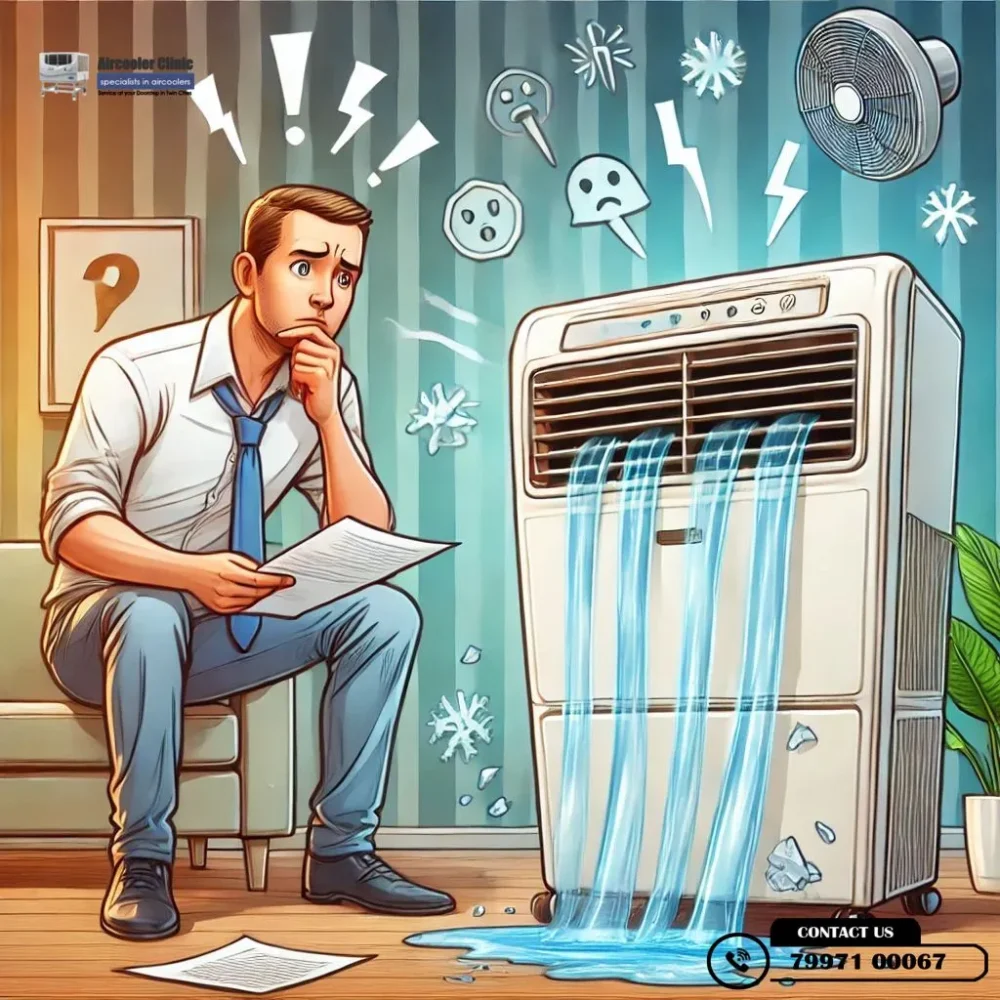
5 Warning Signs Your V-Guard Air Cooler Needs Repair
A V-Guard air cooler that suddenly loses airflow, leaks water, makes unusual noises or stops distributing water properly may need attention. Recognising these warning signs early can help you decide whether routine maintenance is sufficient or professional inspection is needed.
The five warning signs to watch for are weak airflow, water leakage, unusual operating noise, water that does not circulate properly, and a persistent unpleasant odour. None of these symptoms identifies a specific failed component on its own. The actual cause depends on the cooler’s model, condition and operating circumstances.
If you notice smoke, sparks, a burning electrical smell, visible wiring damage or repeated electrical tripping, stop using the cooler and arrange appropriate professional inspection.
1. Weak Airflow or Little to No Air Coming Out
Reduced airflow is one of the most noticeable signs that an air cooler may not be operating normally. The fan may appear to run while the amount of air reaching the room is noticeably lower than usual.
Possible causes
Weak airflow may be associated with:
- Dust or other obstructions restricting air movement.
- Cooling pads or filters that need cleaning or inspection.
- A fan or motor problem.
- A control or speed-setting issue.
- Another mechanical or electrical fault.
These are possibilities rather than a confirmed diagnosis.
What you can safely check
- Switch off the cooler and unplug it before carrying out external checks.
- Look for visible obstructions around the air inlet and outlet.
- Check whether the external speed setting is appropriate.
- Refer to the instructions for your particular model before carrying out routine cleaning.
- If airflow remains weak or the fan does not operate normally, arrange professional inspection.
Do not reach through the grille, touch moving fan blades, tighten internal components or open the motor or electrical compartment.
For further guidance, read our guide to improving airflow in your V-Guard air cooler.
2. Water Leakage Around the Cooler
Water collecting around an air cooler should not be ignored. Persistent leakage can damage nearby flooring, affect surrounding furnishings and indicate a problem that needs attention.
Possible causes
Depending on the cooler design, leakage may be associated with:
- A damaged or improperly seated water tank.
- A drain plug or drain connection that is not sealing correctly.
- A water pump or distribution-system problem.
- A damaged connection or another internal component.
- Overfilling or another water-handling issue.
The visible location of a leak can provide a useful clue, but it does not necessarily identify the failed component.
What you can safely check
- Switch off and unplug the cooler before inspecting it externally.
- Observe where water is collecting without moving or dismantling internal parts.
- Check the visible water level and follow the manufacturer’s instructions for filling the tank.
- Look for obvious external cracks or a displaced drain plug, if accessible without dismantling the appliance.
- If leakage continues, avoid operating the cooler until the cause has been assessed.
Keep electrical plugs, sockets and connections away from water. Never handle a wet plug or socket. If water has reached electrical components or the power connection, do not attempt to disconnect it yourself; isolate the supply only if safe and obtain qualified assistance.
Do not dismantle the pump or water-distribution system simply to find the leak.
3. Unusual Noise During Operation
A new rattling, grinding, scraping or persistent buzzing sound may indicate that something has changed in the cooler’s operation.
Not every sound means that the cooler is damaged. The important factors are whether the sound is new, whether it becomes louder and whether it occurs alongside other symptoms.
Possible causes
Unusual noise may be associated with:
- Vibration or an unstable position.
- An external part that is not seated correctly.
- A fan obstruction or mechanical issue.
- Motor or bearing wear.
- Another component that requires inspection.
The sound alone cannot establish which component is responsible.
What you can safely check
- Switch off the cooler and unplug it.
- Check whether the appliance is standing securely on a level surface.
- Look for visible external obstructions without reaching inside the grille.
- Note when the noise occurs and whether it started suddenly.
- If the sound persists, becomes louder or is accompanied by burning smells, excessive heat, smoke or vibration, stop using the cooler and seek professional assistance.
Do not tighten internal fan blades, lubricate bearings or dismantle the motor unless the work is performed by a suitably qualified person following the instructions applicable to the exact model.
4. Water Is Not Circulating or the Cooling Pads Remain Dry
Many air coolers use a water-distribution system to wet their cooling pads. If water does not circulate as expected, cooling performance may be affected.
However, not every cooler uses the same operating arrangement, and a dry-looking pad does not automatically prove that the pump has failed.
Possible causes
Depending on the model, possible explanations include:
- An insufficient water level.
- A pump or water-distribution problem.
- A blockage or mineral deposits.
- A disconnected or damaged water line.
- A control or component fault.
- An operating mode that does not activate water circulation.
What you can safely check
- Switch off and unplug the cooler before inspecting the tank.
- Check the visible water level and refill only as directed in the model’s instructions.
- Confirm that you are using the intended operating mode.
- If the cooler has a clearly visible external water indicator, observe whether it changes during normal operation.
- If water still does not circulate, request an inspection rather than dismantling the pump or water lines.
Do not open the electrical compartment or test internal wiring, capacitors, motors or pump connections yourself.
For routine care, see our guide to V-Guard air cooler maintenance.
5. Persistent Musty or Unpleasant Odour
A persistent stale or musty smell may indicate stagnant water, accumulated dirt, contaminated surfaces or cooling pads that need attention.
Odour alone does not confirm that mould is present, nor does it identify the exact source of the problem.
Possible causes
- Water left standing in the tank.
- Dirt or residue on accessible surfaces.
- Cooling pads that need cleaning or replacement.
- Water that has not been changed or maintained according to the manufacturer’s instructions.
- Another source of unpleasant odour near the appliance.
What you can safely check
- Switch off and unplug the cooler.
- Inspect the accessible water tank and surfaces for visible dirt or residue.
- Empty, clean and dry the parts that the manufacturer identifies as user-serviceable.
- Follow the model-specific instructions for cleaning and drying the tank and cooling pads.
- If the odour persists after appropriate cleaning, or there is visible contamination that cannot be safely removed, seek professional advice.
Do not mix cleaning chemicals or apply disinfectants, antifungal products or other chemicals unless the manufacturer specifically permits their use for the relevant component. An unsuitable product can damage materials or leave unwanted residues.
When Should You Stop Using Your V-Guard Air Cooler Immediately?
Some warning signs call for more than routine maintenance. Stop using the cooler if you notice:
- Smoke, sparks or a burning electrical smell.
- Damaged electrical wiring or a visibly damaged power connection.
- Repeated circuit-breaker tripping.
- Water reaching electrical connections or internal electrical components.
- Grinding, scraping or severe vibration suggesting a potentially unsafe mechanical condition.
- Unusual overheating accompanied by abnormal operation.
If it is safe to do so, switch off and unplug the appliance without touching wet or damaged electrical connections. If reaching the plug is unsafe, do not touch it; isolate the supply from a safe location if possible and seek qualified assistance.
Do not repeatedly restart a cooler that trips a circuit breaker or shows signs of electrical damage. Do not bypass protective devices or attempt internal electrical repairs.
For non-urgent symptoms, such as a gradual reduction in airflow or routine maintenance concerns, safe external checks may help you describe the problem before requesting service.
Warning Signs at a Glance
Warning sign | What it may indicate | Recommended next step |
Weak airflow | Restricted airflow, pad condition or a mechanical issue | Check external obstructions and settings |
Water leakage | Tank, drain, pump or distribution problem | Observe the visible leak; stop operation if leakage persists or creates an electrical risk |
Unusual noise | Vibration, fan or motor-related issue | Check external stability; stop if the noise is severe or accompanied by other warning signs |
Dry pads or absent water circulation | Low water level, pump or distribution issue | Check the visible water level and operating mode |
Musty odour | Stagnant water, residue or contaminated surfaces | Follow approved cleaning instructions |
Smoke, sparks or electrical burning smell | Potential electrical fault | Stop use and arrange qualified inspection |
These observations help identify the next step; they are not a substitute for a technical diagnosis.
How to Reduce the Risk of Air Cooler Problems
Regular maintenance may help you identify problems before they become more serious. Follow the care instructions for your particular V-Guard model rather than relying on a universal cleaning schedule.
Useful maintenance habits include:
- Keeping the accessible water tank clean.
- Replacing or cleaning cooling pads only as directed by the manufacturer.
- Removing external dust and visible obstructions.
- Following the recommended procedure for draining and storing the cooler when it is not in use.
- Checking for visible leaks and unusual noises before extended operation.
- Avoiding continued operation when the cooler shows signs of electrical or mechanical damage.
For additional guidance, read the V-Guard air cooler seasonal care guide.
When to Request Professional V-Guard Air Cooler Repair
Professional inspection is appropriate when a problem persists after safe external checks, when the cooler stops working normally or when identifying the cause would require opening the appliance.
An inspection may be necessary for recurring water leakage, persistent weak airflow, unusual motor or fan noise, water-circulation problems, starting failures or suspected internal electrical faults.
The actual cause and required repair depend on the cooler’s model, condition and inspection findings. Avoid replacing components based solely on a symptom.
Aircooler Clinic accepts air cooler repair and maintenance requests through its doorstep/service-area model in Hyderabad, subject to location, cooler type, technician availability and service feasibility.
To check availability, call 7997100067 or email aircoolerclinic@gmail.com. Share your location, the V-Guard cooler model if known, and the symptoms you have observed.
You can also review the V-Guard air cooler repair and service information for Hyderabad. Service availability should be confirmed before an appointment is assumed.
Aircooler Clinic is a unit of FIXNEARME. It does not operate a separate physical service center. It should not be represented as a V-Guard manufacturer-operated or officially authorized service center unless that authorization has been independently verified.
Frequently Asked Questions
What are the main warning signs that a V-Guard air cooler needs repair?
The five main warning signs covered in this guide are weak airflow, water leakage, unusual operating noise, water that does not circulate properly and a persistent unpleasant odour. Smoke, sparks, an electrical burning smell or repeated electrical tripping are more urgent safety concerns that require the cooler to be taken out of use.
Why is my V-Guard air cooler running but not cooling properly?
Possible causes include restricted airflow, cooling-pad condition, water-distribution problems, a low water level or another mechanical issue. Check only safe external conditions and the operating settings. A technician may need to inspect the cooler to establish the cause.
Is water leakage a reason to stop using an air cooler?
Persistent leakage should be assessed, particularly if water is collecting near electrical connections or the power supply. Stop using the cooler if leakage creates an electrical risk or the source cannot be safely managed.
Can I repair a noisy V-Guard air cooler at home?
You can switch it off, unplug it and check its external stability and visible obstructions. Internal fan, motor, bearing and electrical repairs should not be attempted without appropriate expertise and model-specific instructions.
What should I do if my air cooler smells musty?
Switch off and unplug the cooler, then follow the manufacturer’s instructions for cleaning and drying user-serviceable parts. Do not assume that the odour proves mould is present. If the smell persists or visible contamination cannot be safely removed, arrange an appropriate inspection.
When should I stop using my V-Guard air cooler immediately?
Stop using it if you notice smoke, sparks, an electrical burning smell, damaged wiring, repeated circuit-breaker tripping, water reaching electrical components or severe abnormal mechanical noise. Do not restart it until the problem has been assessed appropriately.
How can I request V-Guard air cooler repair in Hyderabad?
Contact Aircooler Clinic at 7997100067 or aircoolerclinic@gmail.com and provide your location, cooler model if known, and the problem. Doorstep service depends on current service availability, the cooler and the required work.
Does Aircooler Clinic have a physical V-Guard service center?
No. Aircooler Clinic operates as a doorstep/service-area business and does not operate a separate physical service center. It is a unit of FIXNEARME. Its service availability should be confirmed for the customer’s location and cooler.
Conclusion
Weak airflow, water leakage, unusual noise, poor water circulation and persistent unpleasant odours are five signs that your V-Guard air cooler may need maintenance or repair. Check only safe external conditions, follow the instructions for your model and avoid dismantling electrical or mechanical components yourself.
If the problem persists, or you notice any urgent electrical or mechanical warning signs, stop using the cooler as appropriate and arrange professional inspection. For V-Guard air cooler repair and maintenance requests in Hyderabad, contact Aircooler Clinic to confirm whether doorstep service is available for your location and requirement.