How Often Should You Service a Butterfly Air Cooler? Maintenance Guide for Hyderabad
A Butterfly air cooler does not necessarily need a full professional service at fixed intervals throughout the year. The right maintenance routine depends on how frequently you use the cooler, the amount of dust it encounters, the quality of your water, the condition of its cooling pads, and the maintenance instructions for your specific model.
During Hyderabad’s summer months, regular checks can help you identify dirt buildup, poor water circulation, restricted airflow, and other problems before they become more serious.
Quick answer: Inspect your Butterfly air cooler regularly during frequent use, clean its water tank and accessible components when needed, check the cooling pads every few weeks or sooner if conditions require it, and arrange professional inspection when persistent problems cannot be resolved through safe routine maintenance. Follow your model’s instructions for the correct cleaning methods and intervals.
How Often Should You Maintain a Butterfly Air Cooler?
There is no single verified servicing interval that applies to every Butterfly air cooler. Routine cleaning and professional servicing are different activities and should not be treated as interchangeable.
Maintenance activity | Practical frequency | What to do |
Water level and visible leakage checks | Before or during regular use, as appropriate | Check the normal water indicator and look for visible leaks |
Water tank inspection | Regularly during use | Look for dirt, sediment, unpleasant odours, and deposits |
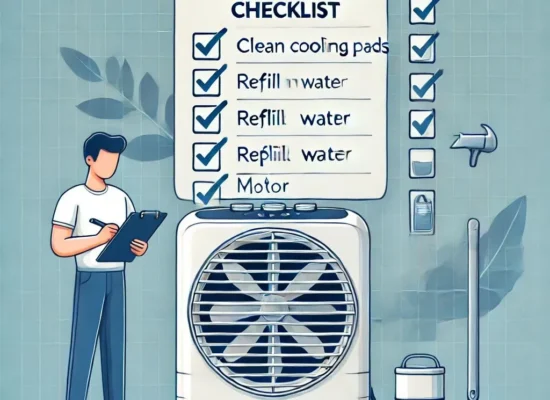
Cooling pad inspection | Every few weeks during frequent use, or sooner when needed | Check for dust, scaling, damage, and uneven wetting |
Accessible exterior and airflow cleaning | When dust accumulates | Clean safe, accessible surfaces according to the manual |
Seasonal maintenance | Before intensive summer use | Inspect the cooler and address visible maintenance needs |
Professional inspection | When symptoms persist or a fault is suspected | Have the relevant water, airflow, mechanical, or electrical system assessed |
Off-season preparation | Before prolonged storage | Drain and clean the tank, dry accessible components, and store the cooler as instructed |
This is a general planning guide, not an official Butterfly maintenance timetable. Your cooler’s manual takes priority if it specifies different procedures or intervals.
1. Why Regular Butterfly Air Cooler Maintenance Matters
An air cooler uses water evaporation to cool incoming air. The water system, cooling pads, and airflow must work together for the appliance to perform as intended.
Dust, mineral deposits, stagnant water, and restricted airflow can interfere with normal operation.
Common signs that maintenance may be needed
- Reduced cooling: Dirty pads, insufficient water, restricted airflow, poor water distribution, or room humidity may contribute.
- Unpleasant odour: Stagnant water, accumulated dirt, or contaminated components may be responsible.
- Visible mineral deposits: Hard water can leave deposits in the tank and water-distribution system.
- Unevenly wet cooling pads: Water may not be reaching all areas as expected.
- Water leakage: A tank, drain, connection, or internal water-system issue may need attention.
- Unusual noise or vibration: Dust, loose parts, or a mechanical problem may be involved.
These signs do not establish a particular fault by themselves. If cleaning does not resolve a problem, the cooler may require further inspection.
2. What to Check Before Summer
Before using your Butterfly air cooler regularly, carry out a basic inspection.
Clean the water tank
Switch the cooler off and disconnect it from the electrical supply before cleaning. Drain the old water and clean accessible tank surfaces according to the manufacturer’s instructions.
Avoid leaving dirty or stagnant water in the tank for extended periods. Rinse and refill as instructed for your model.
Inspect the cooling pads
Look for accumulated dust, mineral deposits, physical damage, deterioration, or persistent odour.
Clean the pads only using the method recommended for your particular cooler. Not every pad can be cleaned in the same way, and not every pad needs replacement after a fixed period.
Check the airflow
Inspect accessible air inlets and outlets for dust or obstructions. Keep the airflow path clear and position the cooler so it can draw in fresh air.
Do not put your hands near moving components or open electrical compartments.
Observe the water system
During normal operation, where your model allows safe observation, check whether the water appears to reach the cooling pads as expected.
If the pads remain dry despite an adequate water level, the problem may involve the pump, water passages, or another part of the circulation system. Do not dismantle the pump yourself.
3. How Often Should You Clean the Cooling Pads?
Cooling pads are an important part of an evaporative air cooler. Dust and mineral deposits can interfere with airflow and the pads’ ability to distribute water effectively.
During frequent summer use, inspecting the pads every few weeks is a reasonable starting point. They may need attention sooner in dusty surroundings or when mineral deposits develop quickly.
Clean the pads when needed and only according to the manufacturer’s instructions.
Check for:
- Visible dirt or dust buildup.
- Mineral deposits or scaling.
- Damaged, sagging, or deteriorated material.
- Persistent unpleasant odour.
- Uneven water distribution across the pads.
Do not automatically replace the pads every season. Replacement depends on their condition, the model’s instructions, and whether appropriate cleaning restores their condition.
For broader cleaning guidance, see our guide to how often you should clean an air cooler.
4. How Often Should You Clean the Water Tank?
Inspect the water tank regularly during periods of frequent use. Clean it when dirt, sediment, scaling, or visible contamination accumulates, rather than relying exclusively on a calendar.
A practical routine is to:
- Switch off and unplug the cooler.
- Drain the existing water.
- Clean accessible tank surfaces as directed in the manual.
- Rinse the tank if the instructions call for it.
- Refill the tank with suitable water according to the manufacturer’s guidance.
If your water contains substantial mineral deposits, inspect the tank and accessible water-system components more frequently.
Do not use strong cleaning chemicals, descaling products, or improvised mixtures unless they are suitable for your model and permitted by its instructions.
5. Should You Arrange Professional Servicing Before Every Summer?
A pre-summer inspection is useful, particularly if the cooler has been stored for several months or showed problems during the previous season. However, this does not mean every cooler necessarily needs the same professional service package each year.
Consider arranging professional inspection when:
- The cooler performed poorly during its previous period of use.
- Cleaning does not restore normal cooling or airflow.
- Water does not circulate properly.
- Water leakage persists.
- The cooler develops unusual noise or vibration.
- A motor, pump, control, or electrical fault is suspected.
- Internal cleaning or repairs require disassembly beyond safe owner maintenance.
A professional assessment can help establish whether the appliance needs cleaning, a specific repair, replacement parts, or further diagnosis.
Do not assume that a motor needs lubrication or that a particular component needs replacement merely because a seasonal service is due. Such work depends on the model, component design, condition, and applicable service instructions.
6. How to Maintain Your Butterfly Air Cooler During Summer
During frequent use, focus on regular observation and condition-based cleaning.
Keep the water fresh
Check the water level according to the operating instructions. Replace dirty or stale water and clean the tank when necessary.
Keep the airflow path clear
Remove dust from accessible external surfaces and vents with the appliance disconnected from power. Avoid unsafe disassembly.
Monitor cooling performance
Pay attention to changes in airflow, cooling, water circulation, noise, and odour. A sudden or persistent change may indicate something beyond routine cleaning.
Provide suitable ventilation
Evaporative coolers generally need fresh-air movement to work effectively. Operating conditions and humidity affect the cooling effect, so a perceived reduction in cooling does not automatically indicate a mechanical fault.
If your cooler runs but does not cool properly, read our guide to Butterfly air cooler cooling problems and safe checks.
7. How to Prepare Your Butterfly Air Cooler for Off-Season Storage
Before storing the cooler for an extended period:
- Switch it off and disconnect it from the electrical supply.
- Drain the water tank.
- Clean the tank and accessible components according to the manual.
- Inspect the cooling pads and clean them as instructed.
- Allow accessible components to dry appropriately.
- Remove dust from external surfaces.
- Store the appliance in a clean, dry location.
- Follow the manufacturer’s instructions for covering and storing the cooler.
Do not leave stagnant water in the tank throughout a prolonged period of non-use.
Before starting the cooler again, inspect it for visible damage, deposits, leakage, and other signs that maintenance may be needed.
8. Common Maintenance Mistakes to Avoid
Using a fixed schedule for every model
Different coolers and operating conditions require different maintenance approaches. Follow the instructions for your specific Butterfly model.
Replacing cooling pads unnecessarily
Inspect the pads and follow the recommended cleaning procedure before deciding whether replacement is required.
Ignoring hard-water deposits
Mineral buildup may affect water distribution and cooling components. Inspect the tank and pads more frequently if deposits accumulate quickly.
Cleaning while the cooler is connected to power
Always disconnect the appliance before cleaning or maintenance. Never clean near moving components while the appliance is operating.
Attempting internal electrical repairs
Do not open electrical compartments, handle exposed wiring, replace electrical components, or attempt hazardous motor and pump repairs without appropriate training and safety procedures.
Assuming every problem can be solved by cleaning
Persistent leakage, unusual noise, poor cooling, or water-circulation problems may require professional diagnosis.
For a water leak, see our Butterfly air cooler leakage guide. For abnormal noise, refer to our Butterfly air cooler noise troubleshooting guide.
9. When Should You Contact Butterfly’s Official Support?
If your cooler is under warranty, you need model-specific maintenance instructions, or you prefer manufacturer-authorized assistance, consult Butterfly’s official service portal.
The portal provides service-request registration, service tracking, a service-centre locator, and access to product documentation and customer support.
Keep your model details and available purchase or warranty information ready when contacting the manufacturer. Check the applicable warranty terms before arranging repairs.
An independent local repair enquiry and a manufacturer-authorized service request are different service routes. Do not assume that a local repair provider is officially authorized by Butterfly unless that authorization has been verified.
10. Butterfly Air Cooler Service in Hyderabad
If routine maintenance does not resolve a persistent problem, you may consider arranging an inspection with an appropriate service provider.
Aircooler Clinic is a unit of FIXNEARME providing doorstep air cooler services in Hyderabad and applicable service areas, subject to availability. Aircooler Clinic does not operate a separate physical service center.
For a service enquiry, provide:
- Your Hyderabad location.
- The Butterfly cooler model, if known.
- The main symptom or maintenance concern.
- Any visible leakage, unusual noise, or reduction in cooling.
- Whether basic cleaning has already been performed.
Contact details:
- Phone: 79971 00067
- Email: aircoolerclinic@gmail.com
Confirm service availability for your location and cooler before arranging an appointment. If you require manufacturer-authorized or warranty-related service, contact Butterfly through its official service channels.
Frequently Asked Questions
How often should I service my Butterfly air cooler?
There is no single verified interval for every model. Inspect and clean the cooler according to its condition, frequency of use, water quality, and manufacturer’s instructions. Arrange professional inspection when a persistent problem or internal fault is suspected.
How often should I clean Butterfly air cooler pads?
Inspect the pads every few weeks during frequent use as a starting point, or sooner if dust or mineral deposits accumulate. Follow the cleaning instructions for your model.
Does my Butterfly air cooler need professional servicing every year?
Not necessarily. A pre-season inspection can be useful, especially after prolonged storage or when problems occurred during the previous season. Whether professional servicing is required depends on the appliance’s condition and the manufacturer’s guidance.
Should I replace the cooling pads every summer?
No universal replacement interval applies to every model. Consider the pads’ condition, the results of appropriate cleaning, and the manufacturer’s replacement instructions.
Why does my Butterfly air cooler smell unpleasant?
Possible causes include stagnant water, accumulated dirt, or contaminated cooling components. Switch off and unplug the cooler before cleaning accessible parts. If the odour persists, further inspection may be necessary.
Can I lubricate the Butterfly air cooler motor myself?
Do not assume that the motor requires routine lubrication. Follow the model-specific instructions and leave internal motor work to an appropriately qualified professional.
What should I do if the cooler is leaking or making unusual noise?
Switch it off if the problem creates a safety concern. Inspect only safe, accessible areas. Persistent leakage, unusual mechanical noise, or suspected electrical faults should be assessed professionally.
Where can I find official Butterfly air cooler support?
Visit Butterfly’s official service portal for service registration, authorized service-centre information, manuals, and support options.
Conclusion
The best maintenance routine for a Butterfly air cooler combines regular observation, timely cleaning, appropriate seasonal preparation, and professional inspection when necessary.
Check the water tank, cooling pads, airflow, and visible condition during frequent use. Clean components according to the manufacturer’s instructions, adjust your inspection frequency to local conditions, and avoid replacing parts or performing repairs without a clear reason.
There is no need to follow an arbitrary professional servicing schedule for every model. Focus on the cooler’s actual condition, follow its instructions, and seek appropriate assistance when a problem persists.