Essential Maintenance Tips for Your Air Cooler
An air cooler needs regular care to maintain airflow, keep its water system clean and perform as expected. Dust, mineral deposits, stagnant water and worn cooling pads can affect its operation over time.
The best maintenance routine is simple: keep the accessible exterior clean, monitor the water tank and cooling performance, maintain clear airflow, and follow the cleaning and servicing instructions supplied by the manufacturer. Tasks involving internal electrical or mechanical components should be left to an appropriately qualified professional.
Why Is Regular Air Cooler Maintenance Important?
Air coolers use water evaporation to cool incoming air. Their performance depends on airflow, water circulation and the condition of the cooling pads.
Regular maintenance helps you:
- Identify visible dirt, deposits, leaks and deterioration early.
- Reduce unpleasant odours associated with stagnant water or dirty surfaces.
- Keep air inlets and outlets clear of avoidable obstructions.
- Recognize when cooling pads may need attention or replacement.
- Prepare the appliance for the next cooling season.
- Identify problems that require professional inspection before they worsen.
Maintenance cannot prevent every breakdown, and the appropriate routine varies by model, usage, water quality and surrounding conditions.
1. Keep the Water Tank Clean
Standing water and accumulated residue can contribute to unpleasant smells and deposits inside an air cooler.
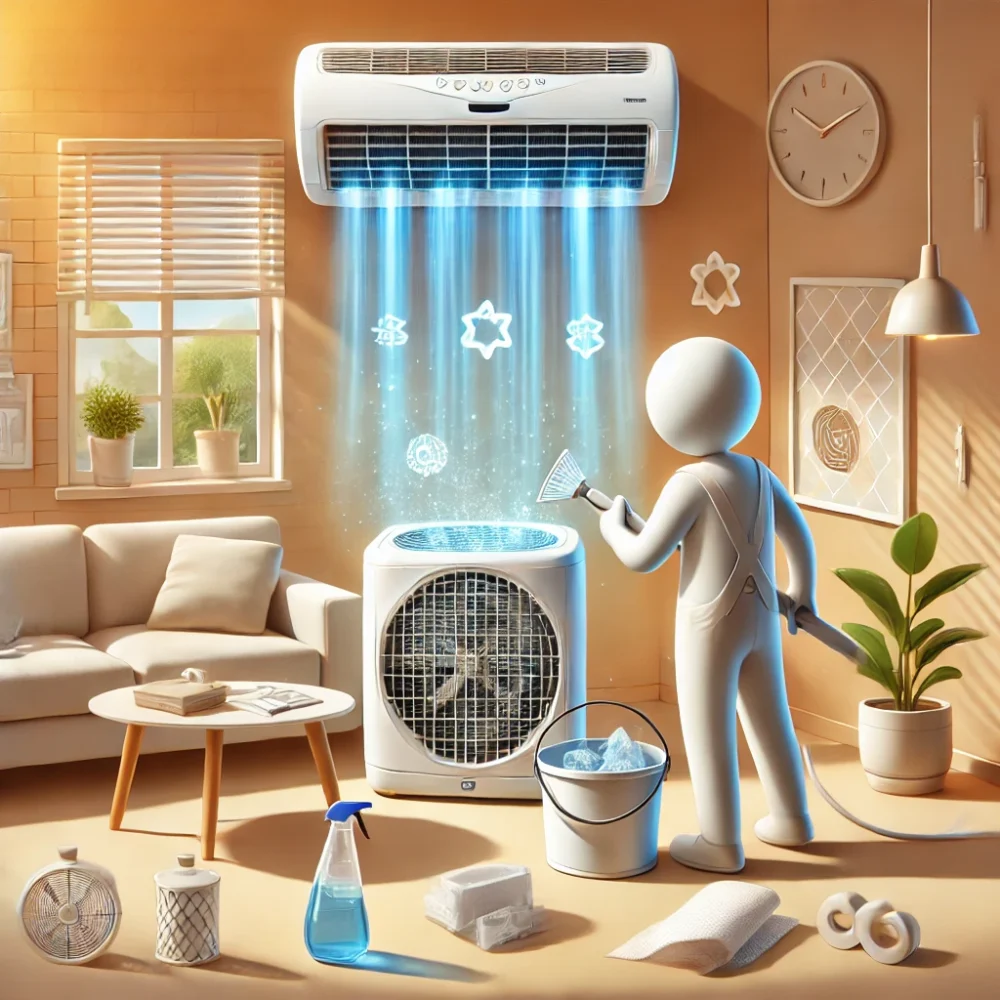
For routine care:
- Follow the manufacturer’s instructions for draining and cleaning the tank.
- Switch off the cooler and disconnect it from the power supply before performing any permitted cleaning.
- Clean only accessible surfaces using the materials and cleaning products recommended for your model.
- Rinse away cleaning residue as directed by the manufacturer.
- Refill the tank with clean water according to the operating instructions.
Do not mix cleaning chemicals or use an unapproved disinfectant. Some products may damage the tank, seals or other components.
How often should you clean the tank?
Use the schedule specified in your owner’s manual. More frequent attention may be necessary when the cooler is used heavily or deposits and odours develop quickly.
2. Monitor the Cooling Pads
Cooling pads hold water while air passes through them. Dust accumulation, mineral deposits, deterioration or uneven water distribution can affect cooling performance.
Look for visible signs such as:
- Heavy dirt or mineral deposits.
- Damaged, sagging or deteriorated pad material.
- Persistent unpleasant smells.
- Reduced cooling performance despite normal operation.
Follow the manufacturer’s cleaning instructions for the specific pad material. Do not assume every pad can be removed, washed with detergent or treated with vinegar.
Replace pads only when required by their condition or the manufacturer’s guidance. There is no single replacement interval suitable for every cooler.
If the pads are difficult to access, heavily deteriorated or require disassembly beyond the permitted maintenance procedure, arrange professional assistance.
3. Keep Air Inlets and Outlets Clear
Restricted airflow can affect the way an air cooler operates.
Check the exterior for accumulated dust, curtains, furniture or other objects blocking air inlets and outlets. Wipe accessible exterior surfaces with an appropriate cloth, following the appliance instructions.
Also consider the room’s ventilation. Evaporative air coolers generally work best when fresh air can enter and humid air can leave the space.
If the room becomes excessively humid or the cooling effect decreases, improve ventilation where practical and reassess the operating conditions.
Do not remove protective guards or open electrical compartments to reach internal fan components.
4. Use Water According to the Manufacturer’s Instructions
Water quality can affect how quickly mineral deposits accumulate. Hard water may leave visible scaling on accessible surfaces and within the water system.
For routine care:
- Use water that meets the manufacturer’s requirements.
- Check for visible deposits during permitted cleaning.
- Drain or refresh water according to the operating instructions.
- Investigate recurring scaling or water-distribution problems rather than attempting internal repairs.
Filtered water is not universally required. Follow the requirements for your particular cooler instead of assuming that bottled, distilled or filtered water is always necessary.
5. Monitor Water Circulation and Cooling Performance
The water pump and distribution system help deliver water to the cooling pads. If water does not circulate correctly, cooling performance may be affected.
You can observe the cooler’s normal operation without opening it.
Pay attention to:
- Cooling pads that appear unusually dry during normal cooling operation.
- A change in cooling performance.
- Water that appears to be leaking from the appliance.
- Unusual noises or vibration.
- Water collecting where it did not previously appear.
These observations do not establish a particular fault. A pump problem, blockage, worn component or another issue may produce similar symptoms.
Do not reach into the tank to manipulate the pump, remove blockages from internal water lines, access wiring or replace components. Stop using the cooler if a fault creates a safety concern and arrange an appropriate inspection.
6. Check for Visible Leaks and Damage
Inspect the accessible exterior and the area around the cooler for signs of water leakage or deterioration.
Look for:
- Water pooling beneath or beside the appliance.
- Visible cracks or damage to accessible surfaces.
- Rust or deterioration that appears to be spreading.
- Water escaping from an unexpected location.
- Water approaching an electrical outlet, plug or other electrical equipment.
If a leak could contact electrical components, do not touch the wet appliance, plug or surrounding electrical equipment. Keep others away and arrange safe assistance. If the area is already wet, do not attempt to disconnect the appliance yourself.
A visible leak may originate from several different components. Avoid assuming that the tank, pump or hose is responsible without an inspection.
7. Prepare Your Air Cooler Before the Season
Before regular seasonal use, review the maintenance requirements in the owner’s manual.
A practical checklist includes:
- Inspect the exterior for visible damage.
- Check the accessible air inlets and outlets for obstructions.
- Look for signs of residue, scaling or unpleasant odours.
- Assess visible cooling-pad condition where accessible without disassembly.
- Check the power cord and plug for visible damage without handling damaged areas.
- Review the manufacturer’s instructions for filling, operation and cleaning.
- Arrange professional inspection if the cooler has developed a fault or has been stored under unsuitable conditions.
Do not use the appliance if the cord is damaged, there is evidence of electrical damage, or the cooler shows signs of a potentially hazardous fault.
8. Store the Air Cooler Properly During the Off-Season
When the cooler will not be used for an extended period, prepare it for storage according to the manufacturer’s instructions.
Where permitted:
- Switch off and disconnect the appliance safely.
- Drain the water tank using the recommended procedure.
- Clean accessible surfaces as instructed.
- Allow permitted cleaned areas to dry as directed.
- Store the appliance in a suitable dry location protected from dust and damage.
- Cover it only in a way that does not trap moisture or conflict with the manufacturer’s storage instructions.
Do not dismantle the pump, drain internal lines by an unapproved procedure, lubricate the motor or access electrical parts unless the task is specifically authorized for the user by the manufacturer. Professional servicing may be appropriate before storage or before restarting an appliance that has developed a fault.
Air Cooler Maintenance Schedule
Use this schedule as a reminder of what to monitor, not as a substitute for your owner’s manual.
When | Maintenance task |
During regular use | Observe cooling performance, unusual smells, leaks and abnormal noises. |
As recommended by the manufacturer | Drain, refresh and clean the water tank; clean the cooling pads and accessible surfaces. |
When deposits or dirt appear | Follow the approved cleaning procedure for the affected component. |
Before the cooling season | Inspect visible condition and review operating instructions. |
Before extended storage | Clean and drain the appliance as instructed and store it appropriately. |
When a fault develops | Stop using the cooler if safety is in doubt and arrange professional inspection. |
If you need a more detailed cleaning-frequency guide, read How Often Should I Clean My Air Cooler?.
For detailed guidance on permitted cleaning tasks, see the Step-by-Step Guide to Cleaning Your Air Cooler.
Common Signs Your Air Cooler Needs Attention
The cooler is not cooling as expected
Possible explanations include restricted airflow, dirty or deteriorated pads, inadequate water circulation or a component fault. Check only the normal operating settings and accessible airflow path. Seek inspection if the problem continues.
The cooler smells unpleasant
Stagnant water, accumulated residue or contaminated surfaces may contribute to odours. Follow the approved cleaning procedure. A persistent smell may require further inspection.
The cooler is leaking water
Stop using the appliance if water may contact electrical components. Do not open the unit to locate the source of the leak.
The cooler makes unusual noises
Unusual or worsening noise may indicate a mechanical problem. Switch off the appliance if safe to do so and arrange an inspection rather than attempting to adjust internal components.
The cooler shows signs of electrical damage
Do not operate an appliance with a damaged cord, plug, suspected electrical fault or evidence of water reaching electrical parts. Obtain appropriate professional assistance.
When Should You Arrange Professional Air Cooler Servicing?
Routine exterior care cannot resolve every maintenance or performance issue. Professional inspection may be appropriate when:
- Cooling performance remains poor after permitted routine maintenance.
- Water circulation appears abnormal.
- Leakage continues or its source is unclear.
- The appliance develops unusual noise or vibration.
- Cooling pads or other parts require inaccessible disassembly.
- Electrical or mechanical faults are suspected.
- The cooler needs internal cleaning or servicing beyond the manufacturer’s user-maintenance instructions.
For maintenance specific to your model, consult its owner’s manual or the manufacturer’s official support channel.
Frequently Asked Questions
How often should I maintain my air cooler?
Monitor the cooler during regular use and clean the tank, pads and accessible surfaces at the intervals specified in the manufacturer’s instructions. Usage, water quality, dust and the cooler’s design influence the appropriate schedule.
Does cleaning an air cooler improve its performance?
Cleaning accessible surfaces and maintaining the cooling pads as instructed can help avoid dirt-related restrictions and deposits. However, cleaning alone will not resolve every cooling problem.
How do I know when cooling pads need replacing?
Look for visible deterioration, persistent deposits or reduced performance that remains after permitted cleaning. Follow the manufacturer’s replacement criteria because pad materials and service life differ.
Can I use vinegar or detergent to clean an air cooler?
Only use cleaning products approved for the particular model and component. Do not assume vinegar, detergent or disinfectants are suitable for every pad, tank, seal or other material.
Can I repair the water pump myself?
Internal pump inspection, electrical checks and component replacement should not be attempted without the appropriate training and authorization. If water circulation appears abnormal, arrange an inspection.
What should I do if my air cooler leaks water?
If water could reach electrical components, keep away from the appliance and arrange safe assistance. For other leaks, stop using the cooler if necessary and seek inspection if the source is unclear or the leakage continues.
Should I cover my air cooler during the off-season?
Use a suitable cover and storage location in accordance with the manufacturer’s instructions. Avoid trapping moisture or storing the appliance in conditions that may cause deterioration.
Conclusion
Consistent air cooler maintenance starts with clean accessible surfaces, appropriate water care, unobstructed airflow and attention to changes in performance. Follow the instructions for your specific model rather than relying on universal cleaning products or replacement intervals.
When a problem involves internal electrical or mechanical components, persistent leakage or abnormal operation, professional inspection is safer than attempting an improvised repair.
If you need help with air cooler maintenance or repair, Aircooler Clinic can be contacted to discuss your requirements and check service availability for your location.
Contact: 7997100067
Email: aircoolerclinic@gmail.com
Aircooler Clinic is a unit of FIXNEARME providing doorstep air cooler services in Hyderabad and applicable service areas. It does not operate a separate physical service center. Service availability should be confirmed before arranging a visit.