How to Prevent Foul Smell in Your Crompton Air Cooler
A foul smell from your Crompton air cooler can make a room uncomfortable, especially when the cooler has been unused for a while or its water tank and cooling pads have accumulated dirt or residue. The smell may come from old water, dirty cooling components, mineral deposits or prolonged dampness. However, the odour alone cannot confirm the exact cause.
To help remove the smell, switch off and unplug the cooler, drain the old water, clean the accessible tank and cooling components according to your model’s instructions, and allow the cleaned parts to dry appropriately. Avoid adding fragrances, disinfectants or household cleaning chemicals unless Crompton specifically permits their use for your model.
This guide explains how to address common odour problems, prevent them from returning and recognise when professional inspection may be necessary.
Why Does a Crompton Air Cooler Smell Bad?
Several maintenance-related conditions can contribute to an unpleasant smell. Identifying the likely source helps you choose an appropriate next step without assuming that every odour has the same cause.
1. Old or stagnant water
Water left in the tank for an extended period may develop an unpleasant smell, particularly when dirt or other residue is also present.
If your cooler has been unused for several days or has been stored between seasons, drain the remaining water before returning it to regular use. Clean the tank if there is visible residue or a lingering odour.
2. Dirty or continuously damp cooling pads
Cooling pads remain wet during normal evaporative cooling. Dust, mineral deposits and other residue can accumulate on the pads over time.
If the pad area develops a persistent musty smell, inspect the accessible pads and follow the cleaning instructions for your particular Crompton model. A pad that remains smelly after appropriate cleaning may require further inspection or replacement.
3. Mineral deposits and residue
Water can leave mineral deposits on the tank, cooling pads and water-distribution components. The amount of buildup depends partly on the water used and the cooler’s operating conditions.
Mineral scaling is not, by itself, proof of bacterial or mould growth. If deposits are visible, use only a cleaning or descaling method compatible with the affected component and approved by the manufacturer.
4. Inadequate drying
Removing old water may not fully resolve an odour if dirt or residue remains on damp components.
When cleaning or storing your cooler, drain the water and follow the manufacturer’s instructions for drying and storage. Do not reconnect the appliance while water is present around electrical components.
5. A problem beyond routine cleaning
If the smell persists despite proper cleaning, the source may be a deteriorated cooling pad, a drainage issue, inaccessible residue or another component problem.
Do not assume that a persistent smell proves a particular fault. Further inspection may be needed to identify the actual cause.
How to Remove a Foul Smell From a Crompton Air Cooler
Before cleaning, check the owner’s manual for the procedure appropriate to your model. The following steps are intended for accessible components that the manufacturer permits you to clean.
Step 1: Switch off and unplug the cooler
Turn the cooler off and disconnect it from the electrical supply before draining water or cleaning any accessible parts.
Keep water away from the plug, socket, motor, switches, wiring and control panel. Do not open electrical compartments or attempt to inspect internal electrical components.
Step 2: Drain the old water
Empty the water tank using the normal drainage method provided for your model.
If the water has been standing for a long time, or the tank smells unpleasant, clean the tank before refilling it. Simply adding fresh water may not remove accumulated residue.
Step 3: Clean the water tank
Inspect the accessible tank surfaces for dirt, sediment and mineral deposits.
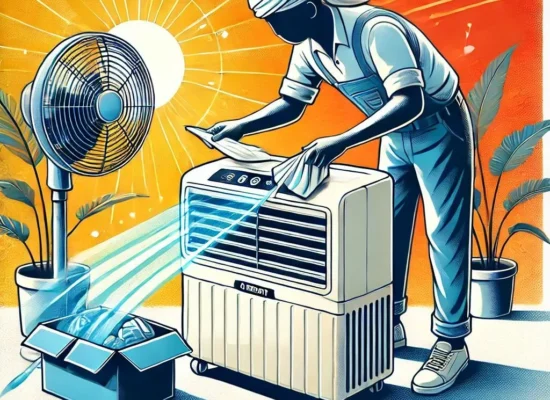
Crompton’s general air-cooler cleaning guide describes emptying the tank, cleaning suitable surfaces with mild soap and warm water, and rinsing thoroughly.
Follow your own model’s instructions, use a suitable soft cloth or sponge, and rinse away any cleaning residue. Do not pour water into electrical areas or use a chemical that the manufacturer has not approved for the component.
Step 4: Inspect and clean the cooling pads
Check the accessible cooling pads for visible dirt, residue or physical deterioration.
Clean removable pads only if your model permits removal and provides an appropriate cleaning procedure. Avoid aggressive scrubbing that could damage the pad material.
Do not automatically use vinegar, bleach, disinfectant, essential oils or other household substances. The suitability of a product depends on the pad material and the manufacturer’s instructions.
If the pads remain noticeably smelly after appropriate cleaning, or appear damaged or deteriorated, they may require replacement or professional inspection.
Step 5: Clean accessible exterior surfaces
Dust on exterior grilles and accessible vents can accumulate during regular use. Wipe suitable exterior surfaces with a soft cloth, keeping moisture away from electrical parts.
Do not dismantle the fan, motor or other internal components merely to investigate an odour. If the source is inaccessible, stop and seek appropriate assistance.
Step 6: Allow cleaned components to dry
Allow the cleaned components to dry appropriately before reassembly, following the instructions for your model.
Do not reconnect the cooler if water remains around electrical components. Reinstall removable parts only when they are correctly positioned and the manufacturer’s instructions permit the next step.
Step 7: Reassemble and check for abnormal behaviour
Reassemble the cooler according to the owner’s manual. Once it is safe to return the appliance to use, observe whether the smell has disappeared and whether the cooler operates normally.
Stop using the cooler if you notice a burning or electrical smell, damaged wiring, abnormal heating, severe noise or another safety concern. Disconnect the power if it is safe to do so and arrange appropriate inspection.
For a broader cleaning walkthrough, see this step-by-step guide to cleaning an air cooler.
How to Prevent the Smell From Returning
Preventive maintenance is generally more useful than repeatedly trying stronger cleaning products after an odour develops.
Drain old water when the cooler is not in use
Avoid leaving unnecessary standing water in the tank during extended periods of non-use. Drain it and follow the storage instructions for your model.
Inspect the tank and pads regularly
During periods of frequent use, look for visible dirt, residue, mineral deposits and persistent odours. Clean the affected components according to the manufacturer’s recommended schedule rather than following a universal interval that may not suit every cooler.
Use suitable water and approved cleaning methods
Water quality can affect mineral buildup. If scaling occurs frequently, consult the owner’s manual about suitable water and maintenance practices.
Do not add fragrances, essential oils, antibacterial liquids or other additives simply to mask an unpleasant smell. Use a product only when the manufacturer specifically approves it for the cooler and component concerned.
Follow the correct seasonal storage procedure
Before putting the cooler away for an extended period, drain the tank and follow the model’s cleaning and storage instructions. Keep the appliance in an appropriate, dry storage environment and ensure that it is ready for safe use before restarting it.
Avoid unnecessary disassembly
Routine odour prevention should not involve opening electrical compartments, handling capacitors or repairing wiring. If cleaning requires unfamiliar disassembly or access to internal components, seek appropriate professional assistance.
What If Your Crompton Air Cooler Still Smells After Cleaning?
If the odour returns quickly or persists after the tank and accessible cooling components have been cleaned correctly, consider the following possibilities:
- Residue may remain in an accessible area.
- The cooling pads may be deteriorated or difficult to clean adequately.
- Water may not be draining as expected.
- A component that cannot be accessed safely may require inspection.
- The smell may originate from somewhere other than the water tank or cooling pads.
These are possible explanations, not a confirmed diagnosis.
Avoid repeatedly applying stronger chemicals or mixing household cleaning products. If the smell remains unresolved, professional inspection may help establish whether the problem requires additional cleaning, pad replacement or another repair.
Important safety distinction: A musty or stale-water smell is different from a burning or electrical smell. If the cooler produces a burning or electrical odour, stop using it, disconnect the power if safe, and arrange an appropriate inspection instead of continuing to operate it for testing.
When Should You Seek Professional Air Cooler Service?
Consider professional assistance when:
- The foul smell persists after appropriate cleaning.
- The cooling pads appear damaged or may need replacement.
- Water does not drain or circulate as expected.
- The cooler has persistent leakage or unusual mechanical noise.
- The odour appears to originate from an internal or inaccessible component.
- You are unsure how to clean a particular component safely.
- You notice a burning or electrical smell or another potential safety issue.
Electrical, motor, wiring and internal component work should be handled by an appropriately qualified technician. Do not attempt hazardous repairs as part of routine maintenance.
Frequently Asked Questions
Why does my Crompton air cooler smell bad?
Possible causes include old water, dirt or residue on the tank and cooling pads, mineral deposits and prolonged dampness. The precise cause depends on the cooler’s condition and may require inspection.
How can I remove a foul smell from my Crompton air cooler?
Switch off and unplug the cooler, drain the old water, clean the accessible tank and cooling components according to the owner’s manual, and allow the cleaned parts to dry appropriately. If the smell persists, seek further inspection.
Should I add antibacterial liquid to my air cooler water?
Do not add an antibacterial product simply because the cooler smells. Use only a product specifically approved by the manufacturer for your model, and follow its instructions. Proper cleaning and water management should come first.
Can I use vinegar to clean Crompton cooling pads?
Do not assume that vinegar is suitable for every pad or model. Although Crompton publishes guidance describing diluted vinegar for certain cleaning procedures, check the instructions for your exact cooler and component before using it.
How often should I clean my Crompton air cooler?
There is no single schedule appropriate for every model and usage pattern. Follow the owner’s manual and inspect the tank and pads regularly during frequent use, paying attention to visible dirt, residue and unpleasant odours.
Should I replace the cooling pads if they smell?
Not automatically. First follow the correct cleaning procedure for your model. If the pads remain noticeably smelly, damaged or deteriorated after appropriate cleaning, replacement or professional inspection may be necessary.
Why does the smell return after cleaning?
The smell may return if residue remains, the pads are deteriorated, old water is left in the tank or another component needs attention. Recurring odour does not establish one particular fault.
Is it safe to open the cooler to find the source of the smell?
Routine cleaning should not require opening electrical compartments or handling wiring, capacitors or the motor. If the source appears to be internal or inaccessible, arrange appropriate professional inspection.
Doorstep Air Cooler Service in Hyderabad
If cleaning has not resolved a persistent Crompton air-cooler odour, you can contact Aircooler Clinic to ask whether applicable doorstep service is available for your location and appliance.
Aircooler Clinic is a unit of FIXNEARME providing doorstep air cooler services in Hyderabad and applicable service areas. Aircooler Clinic does not operate a separate physical service center.
Before booking, provide your locality, cooler model if known, the nature of the odour and the cleaning already performed. Confirm service availability and any applicable charges before approving work.
Contact Aircooler Clinic
- Phone: 7997100067
- Email: aircoolerclinic@gmail.com
Service availability depends on your location, appliance and service requirement.
Conclusion
A foul smell from a Crompton air cooler may be associated with old water, dirty cooling pads, mineral residue or prolonged dampness. Start with safe cleaning of the accessible components, follow your model’s instructions, and avoid unapproved additives or chemical treatments.
If the odour persists after appropriate cleaning—or if you notice a burning or electrical smell—do not assume the problem can be resolved by further cleaning. Seek suitable inspection and keep safety as the priority.