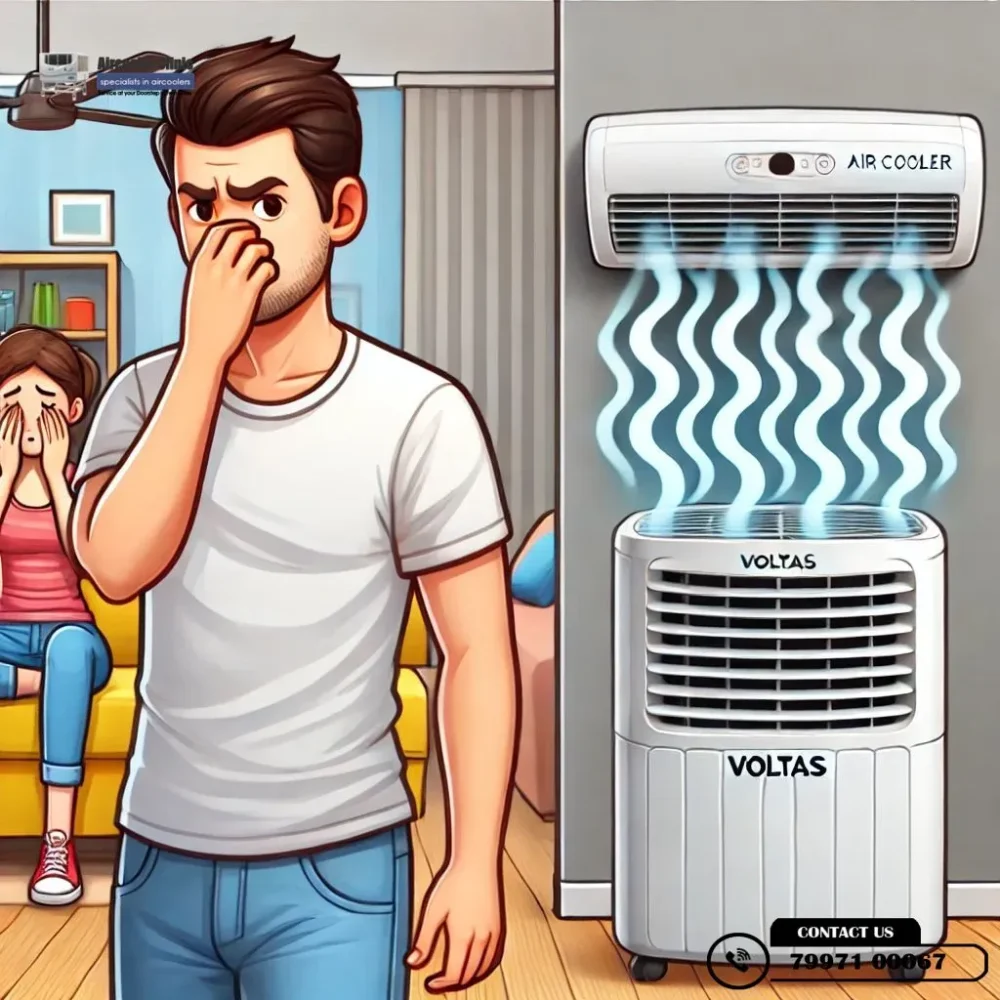
Why Does My Voltas Air Cooler Smell Bad? Causes and How to Fix It
A bad smell from your Voltas air cooler often points to stagnant water, residue inside the water tank, dirty cooling pads or moisture trapped during storage. The odour may become noticeable when you switch on the cooler after it has been unused for several days.
In many cases, you can begin with a few safe maintenance checks. Switch off and unplug the cooler, empty the old water, clean only the accessible parts according to the manufacturer’s instructions, and allow them to dry as directed. If the smell persists, the cooling pads, water circulation system or another internal component may need inspection.
Why Does My Voltas Air Cooler Smell Bad?
The most common possible causes are:
- Stale water: Water left standing in the tank can develop an unpleasant smell.
- Dirty water tank: Residue, deposits and accumulated dirt can contribute to odour.
- Dirty or worn cooling pads: Damp pads can retain dirt and develop a musty smell.
- Moisture after storage: A cooler stored without adequate draining or drying may smell stale when used again.
- Water circulation problems: Poor water distribution or a pump-related issue may leave some areas persistently damp.
- Other internal contamination or faults: A smell that remains after appropriate cleaning may require further inspection.
These are possible causes, not a confirmed diagnosis. The actual cause depends on the cooler’s condition, model and maintenance history.
1. Stagnant Water in the Tank
Water that remains in an air cooler when it is not in use can develop an unpleasant or musty odour. Dirt and residue in the tank may make the problem worse.
What you can do
- Switch off the cooler and disconnect its plug from the power supply.
- Empty the old water using the appliance’s intended drainage method.
- Clean accessible tank surfaces according to the instructions for your model.
- Rinse as directed and ensure the tank is ready for use before refilling it with fresh water.
Do not pour cleaning chemicals, fragrances, essential oils or disinfectants into the tank unless the manufacturer specifically permits the product and method for your model.
2. Dirty or Worn Cooling Pads
Cooling pads hold moisture while air passes through them. Over time, dirt and mineral deposits can accumulate, and the pads may become clogged or deteriorate.
A problem with the pads becomes more likely when:
- The smell remains after the tank has been cleaned.
- The pads appear heavily soiled or visibly deteriorated.
- Airflow or cooling performance has decreased.
- Water does not appear to distribute evenly across the pads.
What you can do
Switch off and unplug the cooler before carrying out any maintenance. Check the pads only if they are safely accessible without opening electrical compartments or dismantling parts beyond the manufacturer’s instructions.
Clean or replace the pads according to the model-specific guidance. Do not assume every Voltas cooler uses the same pad type or replacement interval.
If the pads are difficult to access, damaged or persistently odorous, arrange an appropriate inspection.
3. Moisture Trapped During Storage
An air cooler that has been stored with water remaining inside may develop a stale smell. Moisture trapped around the tank and cooling media can contribute to the problem.
How to reduce the risk
- Empty the tank before storing the cooler.
- Follow the manufacturer’s cleaning and drying instructions.
- Allow accessible, cleaned parts to dry as directed before storage.
- Keep the appliance in a suitable storage area.
- Before using it again, inspect the accessible tank and pads for visible dirt, deposits or damage.
Do not assume that a brief period of fan operation will resolve all contamination. If the smell persists, investigate the source instead of simply masking it.
4. Dirt and Mineral Deposits
Dust and deposits can build up on accessible surfaces and water-contact components. Hard water may contribute to mineral scaling, depending on the water supply and the appliance.
Signs to look for
- Visible deposits on accessible tank surfaces.
- White or chalky residue around water-contact areas.
- Dirt or discoloration on cooling pads.
- Persistent odour despite replacing old water.
Clean the affected areas only using a method approved for the model. Avoid harsh chemicals, abrasive tools and unapproved descaling products, which may damage materials or leave unwanted residues.
If heavy scaling affects the pump or water distribution system, professional inspection may be more appropriate than attempting to dismantle the cooler.
5. Water Circulation Problems
If water does not reach the cooling pads evenly, some areas may remain unusually damp or dirty. A blocked water distribution channel, pump problem or other fault could contribute to the condition.
You may notice:
- Uneven wetting of the cooling pads.
- Reduced cooling performance.
- A smell that returns soon after cleaning.
- Unusual operating behaviour alongside the odour.
These signs do not establish which component is faulty. Do not open electrical compartments, handle internal wiring or attempt motor or pump repairs while the appliance is connected to power.
If cleaning accessible parts does not resolve the problem, arrange a suitable inspection.
How to Clean a Smelly Voltas Air Cooler Safely
Follow this general sequence, subject to the instructions supplied with your specific model.
Step 1: Switch off and unplug the cooler
Disconnect the appliance from the power supply before cleaning. Do not clean internal electrical components or allow water to enter electrical compartments.
Step 2: Drain the old water
Use the cooler’s intended drainage method to empty the tank. Do not tilt a heavy cooler or use an improvised drainage method that could cause a spill or damage the appliance.
Step 3: Clean accessible tank surfaces
Use the cleaning method and materials permitted by the manufacturer. A soft cloth or suitable non-abrasive cleaning tool may be appropriate for accessible surfaces, depending on the model.
Step 4: Check the cooling pads
Inspect accessible pads for visible dirt, deposits, damage or deterioration. Follow the manufacturer’s instructions for cleaning, removal or replacement.
Step 5: Rinse and dry as directed
Remove cleaning residue using the recommended procedure. Allow cleaned parts to dry as specified before reassembly or storage.
Step 6: Reassemble and inspect
Ensure that all parts you removed according to the manual are correctly refitted. Do not operate the appliance if a cover, guard or other required component is missing or incorrectly installed.
Step 7: Test normal operation
Reconnect and operate the cooler only when it is dry, correctly assembled and safe to use. Follow the operating instructions for your model.
If the odour persists, becomes stronger or is accompanied by smoke, unusual heating or an electrical smell, stop using the appliance. Disconnect power if it is safe to do so and arrange professional assistance.
What Should You Avoid When Removing Air Cooler Odour?
Some quick fixes can create new problems or merely cover up the original smell.
Avoid:
- Adding essential oils, perfumes or fragrances to the water tank without explicit manufacturer approval.
- Mixing vinegar, bleach, detergents or other cleaning chemicals.
- Using unapproved disinfectants or descaling products.
- Spraying water onto the motor, wiring, control panel or other electrical components.
- Opening electrical compartments to investigate an odour.
- Running the cooler with damaged parts or missing protective covers.
- Replacing cooling pads on a fixed schedule without considering the model and their condition.
The safest approach is to use the cleaning method specified for the particular appliance rather than applying a universal cleaning recipe.
How to Prevent Your Voltas Air Cooler From Smelling Bad Again
A simple maintenance routine can help reduce the chance of unpleasant odours returning.
After use or during periods when the cooler is not needed
- Follow the manufacturer’s instructions for draining unused water.
- Avoid leaving stale water standing in the tank for extended periods.
- Keep accessible surfaces clean and dry as directed.
During regular maintenance
- Inspect the tank for residue and visible deposits.
- Check accessible cooling pads for dirt, deterioration or uneven water distribution.
- Clean the appliance at the intervals recommended for your model and usage conditions.
- Check for leakage or unusual operating behaviour.
- Use only cleaning products and maintenance methods approved for the appliance.
Before seasonal storage
- Drain the tank.
- Clean and dry the appliance as directed.
- Store it in a suitable location.
- Inspect it before returning it to service.
For additional guidance on prevention, read how to prevent mould and bacteria growth in your Voltas air cooler.
When Should You Seek Professional Help?
Basic cleaning may be enough when the odour comes from stale water or removable dirt. Further assistance may be appropriate when:
- The smell remains after the tank and accessible parts have been cleaned correctly.
- The cooling pads are damaged or difficult to access.
- Water is not circulating or distributing properly.
- There is a persistent leak or visible internal deterioration.
- The cooler makes unusual noises or its performance changes unexpectedly.
- The smell resembles burning plastic, overheated insulation or another electrical fault.
Stop using the appliance if you suspect an electrical fault. Do not continue operating it to see whether the smell disappears.
Frequently Asked Questions
Why does my Voltas air cooler smell bad when I switch it on?
Stagnant water, residue in the tank, dirty cooling pads or moisture trapped during storage are possible causes. Inspect and clean accessible parts according to the manufacturer’s instructions. If the smell persists, further inspection may be necessary.
How do I remove a musty smell from my air cooler?
Switch off and unplug the appliance, drain old water, clean accessible surfaces using the approved method, and follow the instructions for drying and reassembly. If the odour remains, the pads or water circulation system may need attention.
Can I put vinegar or baking soda in my Voltas air cooler?
Do not assume either product is suitable for every model. Use them only if the manufacturer’s instructions permit the product and application. Avoid experimenting with cleaning mixtures or combining chemicals.
Should I add essential oil to the water tank to make it smell fresh?
Not unless the manufacturer explicitly approves the product for your particular cooler. Fragrances may mask the odour without addressing its source and may leave unwanted residues.
Do foul-smelling cooling pads need replacement?
Not always. Some pads may be cleaned according to the manufacturer’s instructions. Replacement may be appropriate if they are worn, damaged, heavily contaminated or remain odorous after permitted cleaning.
Why does the smell return after I clean the tank?
Possible explanations include residue remaining on the pads, moisture in other accessible areas, mineral deposits or a water circulation problem. The cause cannot be determined from the smell alone. Consider further inspection if the problem continues.
How often should I clean my Voltas air cooler?
The appropriate interval depends on the model, usage, water quality and environmental conditions. Follow the manufacturer’s maintenance schedule and clean sooner when visible dirt, deposits or unpleasant odours appear.
Can I continue using the cooler if it smells like burning plastic?
No. Stop using it. Disconnect the power if safe to do so and arrange an appropriate inspection. Do not open electrical compartments or attempt electrical repairs yourself.
Need Help With a Smelly Voltas Air Cooler?
If cleaning the accessible parts does not resolve the odour, the cooling pads, water circulation system or another component may require inspection.
Aircooler Clinic is a unit of FIXNEARME providing doorstep air cooler services in Hyderabad and applicable service areas, subject to availability. Aircooler Clinic does not operate a separate physical service centre and should not be represented as a Voltas-authorized service centre without independent evidence of authorization.
To discuss your cooler’s symptoms and check doorstep service availability, contact Aircooler Clinic.
Phone: 7997100067
Email: aircoolerclinic@gmail.com
Describe when the smell occurs, whether it persists after cleaning, and any visible changes in the tank or cooling pads. Confirm service availability and the applicable service requirements before arranging a visit.
Conclusion
A bad smell from a Voltas air cooler may be caused by stale water, dirty cooling pads, accumulated deposits or moisture trapped during storage. Start by switching off and unplugging the appliance, cleaning accessible parts according to the model’s instructions, and ensuring proper maintenance.
Avoid unapproved cleaning chemicals and fragrances. If the smell persists, or if you notice burning odours, unusual heating, leaks or abnormal operation, stop using the appliance when a safety concern is suspected and arrange appropriate inspection.