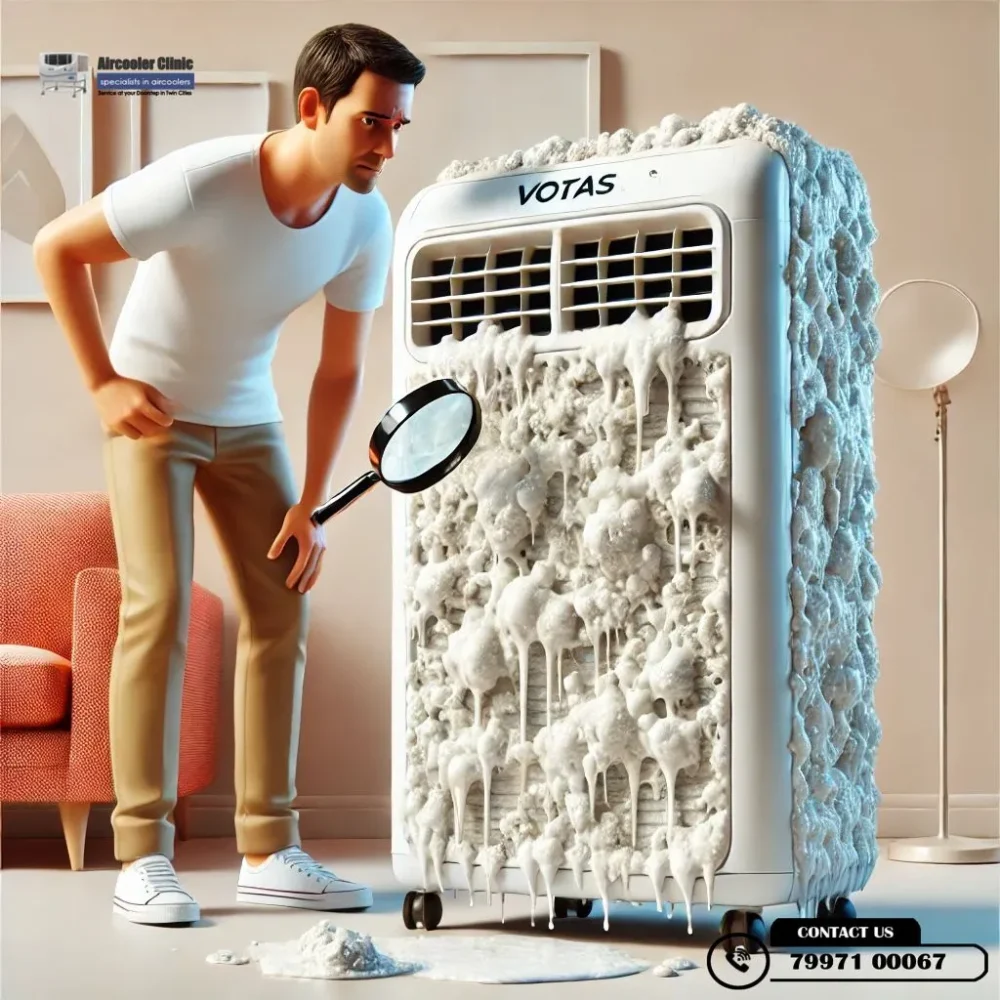
How to Solve Hard-Water Scaling Issues in Voltas Air Coolers
Hard water can leave white, chalky mineral deposits inside a Voltas air cooler’s water tank and on its cooling pads or water-distribution components. Over time, significant buildup may interfere with water circulation and reduce cooling performance.
The safest approach is to identify the affected area, disconnect the appliance before cleaning, and follow the cleaning instructions for your exact cooler model. Do not assume that vinegar, acids or household descaling products are suitable for every pad, pump or internal component.
What Causes Hard-Water Scaling in a Voltas Air Cooler?
Hard water contains dissolved minerals, particularly calcium and magnesium. When water evaporates or remains on surfaces, some of these minerals can be left behind as deposits.
In an air cooler, mineral buildup may develop on:
- The inside of the water tank.
- Cooling pads or their supporting surfaces.
- Water-distribution channels and outlets.
- Accessible water-contact surfaces around the circulation system.
The amount of buildup depends on the water’s mineral content, how frequently the cooler is used, and how consistently the tank and water-contact parts are maintained.
Voltas’s published air cooler maintenance guidance also identifies mineral deposits and clogged cooling pads as issues that can affect cooler performance.
Signs of Hard-Water Scaling
The following signs can suggest mineral buildup, although none is conclusive on its own.
1. White or chalky deposits
White, crusty residue on the tank or other water-contact surfaces may be dried mineral deposits. Ordinary dust, cleaning residue and other material can look similar, so consider where the residue appears and whether it returns after cleaning.
2. Reduced cooling performance
A cooler may deliver less refreshing air if mineral deposits restrict water distribution or contribute to pad blockage. However, weak cooling can also result from dirty or worn pads, insufficient water, poor ventilation or a malfunctioning component.
3. Unevenly wet cooling pads
If some areas of the pads become wet while others remain comparatively dry during normal operation, the water-distribution system may need inspection. Mineral deposits are one possible cause, not a confirmed diagnosis.
4. Changes in water circulation
Slow, uneven or interrupted water circulation may indicate a problem with the pump, water passages, water level or another component. Do not dismantle the pump to investigate unless the manufacturer’s instructions explicitly permit the task.
5. Deposits that return quickly
Repeated chalky buildup after cleaning may indicate that the water contains substantial dissolved minerals. Check the water source and cleaning routine before assuming that a component has failed.
How to Remove Hard-Water Scale Safely
The appropriate cleaning procedure depends on the cooler model, the pad material and the affected component. Use the following general approach only where it is consistent with the manufacturer’s instructions.
Step 1: Switch off and unplug the cooler
Switch the appliance off and disconnect it from the power supply before cleaning. Keep the plug and electrical connections away from water.
Do not open electrical compartments, handle exposed wiring or attempt internal electrical repairs.
Step 2: Drain the water tank
Drain the tank using the normal drainage method provided for your model. Remove standing water and loose debris without splashing water into the motor, control panel or other electrical areas.
Step 3: Inspect the mineral deposits
Look for white or chalky residue on accessible tank surfaces and other parts that the manual identifies as user-cleanable.
Avoid scraping with sharp metal objects, abrasive pads or tools that could damage the tank lining, coatings, seals or plastic surfaces.
Step 4: Clean accessible tank surfaces
Use a soft cloth or non-abrasive brush with water, following the manufacturer’s cleaning instructions. If a cleaning product is needed, select one explicitly permitted for the relevant surface.
Do not automatically use vinegar, citric acid, bleach, strong descalers or other household chemicals. A cleaning agent that removes scale from one surface may damage another material or affect seals and pump components.
Step 5: Check the cooling pads
First establish whether the pads are reusable and washable according to the cooler’s instructions.
If washing is permitted, clean them using the approved method. Do not assume that all pads can be soaked, scrubbed vigorously or exposed to acidic solutions. Some pads may require gentle rinsing, while damaged or unsuitable pads may need replacement.
Replace pads only with a compatible type specified for the model.
Step 6: Leave pump and internal-component cleaning to the approved procedure
If mineral deposits appear around the pump, filter or internal water passages, consult the model manual for the permitted cleaning procedure.
Do not immerse the pump in vinegar, open a sealed assembly or force tools into narrow water passages without explicit manufacturer instructions. If the buildup cannot be reached safely, arrange a professional inspection.
Step 7: Rinse and reassemble as instructed
Remove cleaning residue using the rinsing method specified by the manufacturer. Refit user-removable parts correctly and ensure the appliance is dry in the areas required by the manual before reconnecting it.
Never operate the cooler with electrical components wet or with protective covers improperly fitted.
Step 8: Check normal operation
Once the appliance has been correctly reassembled and is safe to operate, check whether water distribution and cooling have improved.
If water circulation remains weak, the pump makes unusual noises, leakage develops or the cooler continues to perform poorly, switch it off and seek further inspection rather than repeating increasingly aggressive cleaning treatments.
How to Prevent Hard-Water Scaling
Preventive maintenance can reduce the accumulation of mineral deposits and make future cleaning easier.
Use suitable water
If the manufacturer’s instructions permit it, water with a lower mineral content may help reduce scale formation. Filtered water is not necessarily softened water: the effectiveness of filtration depends on the treatment method.
Follow the model’s water-quality requirements and do not add chemicals or water-treatment products to the tank unless expressly permitted.
Empty and clean the tank regularly
Drain standing water and clean the tank according to the manufacturer’s maintenance schedule. Increase inspection frequency if the cooler is used heavily or deposits develop quickly.
A consistent cleaning routine is preferable to waiting until thick deposits obstruct water distribution.
Inspect the pads periodically
Look for visible residue, clogging, deterioration and uneven wetting. Clean reusable pads as directed and replace damaged or worn pads when appropriate.
Monitor water circulation
Check the water level and accessible water-distribution outlets according to the manual. Persistent interruptions or unusual pump sounds should be investigated rather than attributed automatically to hard water.
Maintain the cooler before seasonal use
Before periods of heavy use, inspect the tank, pads and accessible water-contact surfaces. Follow the manufacturer’s storage instructions when the cooler will remain unused for an extended period.
Hard-Water Scaling vs Other Air Cooler Problems
Symptom | Possible explanation | Appropriate next step |
White, chalky residue | Mineral deposits or other surface residue | Inspect and clean the affected surface using the approved method. |
Poor cooling with visible pad deposits | Scale or pad blockage may contribute | Inspect the pads and water distribution. |
Poor cooling without visible scale | Ventilation, water level, pad condition or another fault | Check normal user-accessible items first. |
Pump noise or interrupted circulation | Obstruction, water-level issue or pump fault | Stop if abnormal operation persists and arrange inspection. |
Water leakage | Drainage, seal, tank or assembly issue | Switch off, unplug and inspect only accessible areas. |
Repeated overheating or shutdown | Possible motor, electrical or other component fault | Discontinue use and obtain qualified assistance. |
These are troubleshooting possibilities, not definitive diagnoses. For additional guidance, see our article on Voltas air cooler overheating and shutdowns.
When Should You Seek Professional Help?
Arrange an inspection if:
- Scale is blocking internal water passages that cannot be cleaned using the approved procedure.
- Water circulation remains poor after routine maintenance.
- The pump makes persistent unusual noises or fails to circulate water.
- The cooler leaks after cleaning or reassembly.
- The pads are severely clogged, damaged or need model-compatible replacement.
- The appliance repeatedly overheats, shuts down or shows signs of an electrical fault.
Do not continue operating an appliance that shows signs of electrical damage, persistent overheating or unsafe leakage.
For additional hygiene guidance, read How to Prevent Mold and Bacteria Growth in Your Voltas Air Cooler.
Frequently Asked Questions
What causes hard-water scaling in a Voltas air cooler?
Dissolved minerals in hard water can remain on surfaces as the water evaporates. Deposits may accumulate in the tank, on cooling pads and around water-distribution components.
Can hard-water scale reduce cooling performance?
Yes. Significant mineral buildup can restrict water distribution or contribute to pad blockage. However, poor cooling has several possible causes, so inspect other user-accessible factors before assuming that scale is responsible.
Can I use vinegar to remove scale from my Voltas air cooler?
Only if the instructions for your specific model and the affected material permit it. Do not assume that vinegar is safe for every cooling pad, pump, seal or internal component.
Can I clean the water pump myself?
Only follow a pump-cleaning procedure explicitly permitted by the manufacturer for your model. If the procedure requires disassembly, electrical work or access to internal components, seek professional assistance.
Does filtered water prevent all mineral buildup?
No. The result depends on the filtration method and the minerals present in the source water. Some filtration systems reduce particles but do not substantially reduce dissolved hardness minerals.
How often should I clean my Voltas air cooler?
Follow the maintenance schedule in your model’s manual. Usage, dust levels and water quality affect how frequently inspection and cleaning are needed.
Why is my cooler still not cooling after cleaning?
The problem may involve worn pads, inadequate water distribution, ventilation, a pump fault or another component. If routine maintenance does not help, avoid repeated chemical treatments and arrange an inspection.
Conclusion
Hard-water scaling in a Voltas air cooler can often be managed through regular inspection, appropriate tank cleaning and maintenance of compatible cooling pads. The key is to distinguish mineral deposits from other faults and to avoid cleaning methods that could damage the appliance.
Follow the instructions for your exact model, use only approved cleaning products, and seek professional help when scale affects inaccessible components or the cooler continues to malfunction.
For doorstep air cooler repair and maintenance enquiries, contact Aircooler Clinic at 7997100067 or aircoolerclinic@gmail.com. Service availability should be confirmed for your location and the work required.
Aircooler Clinic is a unit of FIXNEARME providing doorstep air cooler services in Hyderabad and applicable service areas. It does not operate a separate physical service center.